


Key Takeaways
- Crude oil, or “black gold,” is the product of millions of years of geological processes, originating from ancient marine organisms and transformed under heat and pressure. Understanding where crude oil comes from, how it is located, extracted, and consumed, provides essential insight into global energy systems, technological developments, and economic dependencies. This knowledge equips students, investors, and industry professionals to navigate the evolving landscape of energy production and sustainability.
The impact of crude oil on civilization has been pivotal in the course of history. It is the source of energy for cars, industries, and heaters; it is also the basis for plastics, chemicals, lubricants, and countless other products we use daily. The value of crude oil is immense not only because of its high energy content but also due to its wide-ranging applications in various sectors.
In spite of its great significance, crude oil is a limited resource which has been created through natural processes over geological periods. To know crude oil’s origin, spotting, depth and future is important for the people who are in energy, geology or global economics fields whether they be students, researchers or professionals.
What Exactly Is Crude Oil
Crude oil refers to a fossil fuel occurring naturally as a result of the decomposition of organic matter from ages gone by. It is a complex combination of various hydrocarbons, which are a mixture of hydrogen and carbon atoms. It occurs as a liquid and is found between layers of natural gas and a layer of saltwater within sedimentary rock deposits.
Due to the fact that it takes millions of years to produce, it is nonrenewable. Once extracted, it is impossible to replace on a human timescale. Upon extraction, crude oil must undergo refining to yield the production of gasoline, diesel, and jet fuel which are the main fuels, as well as to produce petrochemicals that are used in plastics, fertilizers, and synthetic materials.
Where Does Crude Oil Come From?
A common misconception is that petroleum comes from dinosaurs. In reality, crude oil and natural gas formed long before dinosaurs ever existed.
We call petroleum a fossil fuel because it is made of hydrocarbons derived from the remains of microscopic plants and animals such as algae, plankton, and diatoms that lived in ancient marine environments hundreds of millions of years ago.
When these tiny organisms died, they settled on the floors of oceans, seas, and riverbeds. Over time, their remains were buried under layers of sand, silt, and sediment. This burial protected the organic material from oxygen, preventing decay.
As millions of years passed, increasing heat and pressure from the overlying sediments transformed this organic matter into kerogen, a solid, waxy substance that serves as the precursor to oil and natural gas. With continued heating, chemical reactions broke the kerogen down into hydrocarbons. Moderate temperatures produced liquid crude oil, while higher temperatures generated natural gas.
These hydrocarbons then migrated upward through porous rocks until they became trapped beneath impermeable layers such as shale or salt. These trapped accumulations form what we now call oil and gas reservoirs, which are accessed through drilling.
How Deep Underground Is Crude Oil Found?
To put it differently, crude oil does not move constantly downward into the Earth. The drilling technology has been the major factor in enabling access to the deeper reservoirs over the years.
The average drilling depths in the middle of the 20th century were about 3,500 feet. This number increased to approximately 6,000 feet by the early 2000s. Currently, some of the deepest wells are nearly 40,000 feet deep which is a greater depth than the height of Mount Everest.
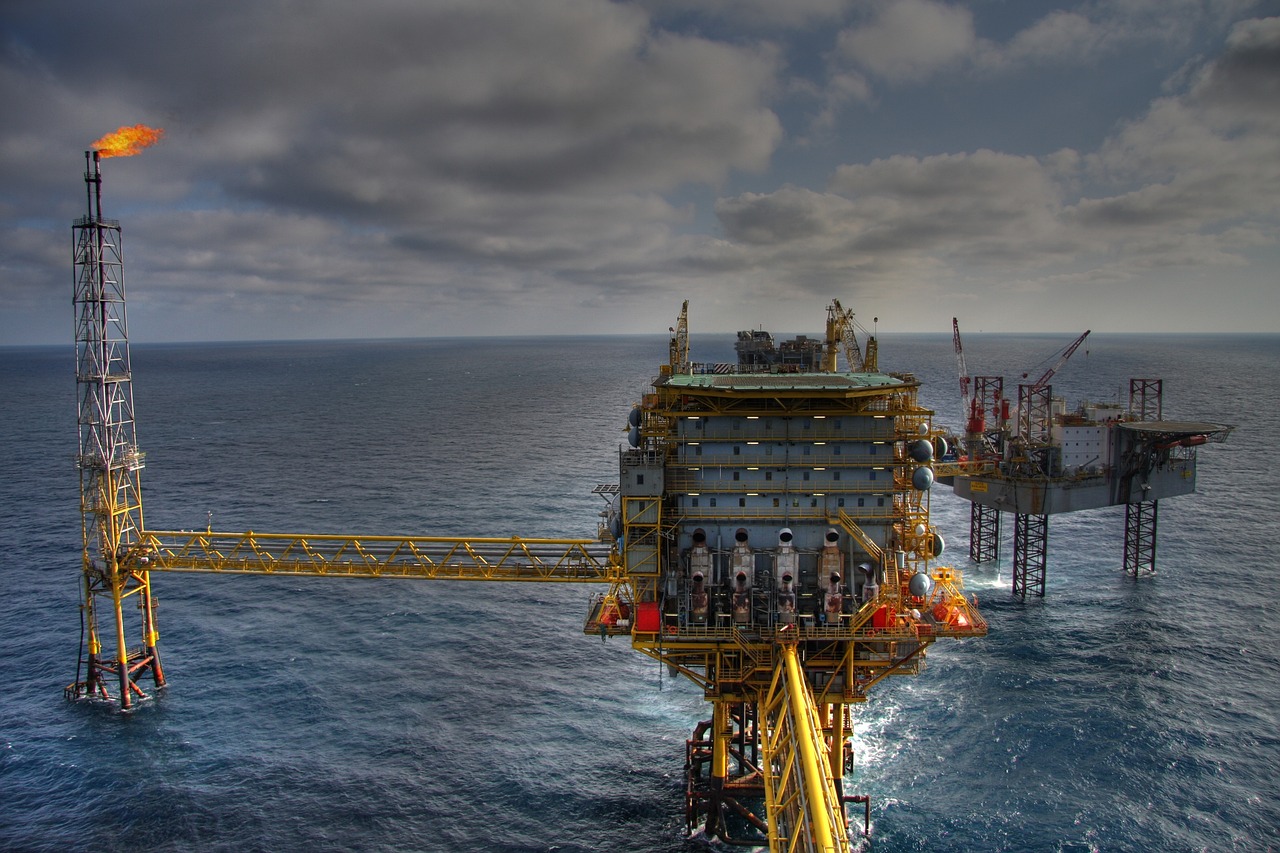
The modern method of horizontal drilling not only allows but it also makes it more efficient to extract oil from the reservoirs which are miles wide in breadth. The use of offshore drilling platforms and subsea wells makes it possible to obtain oil beneath the ocean, however, this is a very costly and technically risky operation.
How Do We Know Where to Find Oil?
The exploration of crude oil needs a combination of geology and technology to its fullest. In the past, the geologists of exploration and all associated activities were interpreting the surface signs only like rock formations and oil seeps to know where oil might be located.
The major tool for exploration nowadays is seismic tests. The technique of seismic tests involves creating shock waves that are sent underground and that get reflected by different layers of rocks. The sensors measure the waves that come back, and the information is used to develop very detailed 3D visuals of the underground areas that might contain oil.
The other methods that can be employed are gravity and magnetic surveys, vapor and gas sensors, satellite pictures, and GIS. After the location is verified with some testing, it is then accurately marked for exploratory drilling.
Which Countries Lead Global Oil Production?
The oil production of the world is dominated by a few countries only. According to the recent statistics, the top producers consist of (2024):
United States: over 22 million barrels per day
Saudi Arabia: more than 10 million barrels per day
Russia: an estimated 10 million barrels per day
Canada: around 6 million barrels per day
China: around 5 million barrels per day
More than 50% of the world's oil production is from these countries, which is over 100 million barrels per day on average if we add up the crude oil and associated liquids.
How Much Oil Is Left?
It is not an easy job to estimate how much more oil we have left. Estimates are being continuously updated based on new discoveries of oil reserves, advancements in technology to exploit them, and their levels of usage. According to BP statistics on proven oil reserves, if no new discoveries were made and consumption continued at current levels, the Earth has only about 53 years of oil supply remaining.
“Peak oil” forecasts have always been impacted by the new technologies that have been developed, such as the hydraulic fracturing technique and the oil recovery process that have made available resources that were hitherto out of reach.
What Happens If We Run Out of Oil?
The oil sector has been the backbone of the modern economies existing in the present era and its impact can be felt in areas such as transportation, manufacturing, agriculture, healthcare, and infrastructure development. However, it has been estimated that oil will not suddenly vanish.
In other words, future projections point to the steady reduction in output, increasing costs of extraction, as well as increased prices for more difficult-to-access oil reserves. Challenges faced in the industry will hasten the adoption of renewables, promote the increase in resource expenditures on efficient solutions, and the need to become more efficient.
There could be a reduction in the use of oil, but the process of switching would likely be gradual rather than abrupt.
Conclusion
Crude oil is a product of millions of years of geological processes, formed from ancient marine organisms and transformed under heat and pressure. Understanding where crude oil comes from, how it is discovered and extracted, and its remaining reserves is essential for anyone involved in energy, economics, or environmental studies. While oil continues to power modern civilization, its finite nature and environmental impact encourage technological innovation and a shift toward more sustainable energy solutions.
FAQs
Does crude oil come from dinosaurs?
No. Crude oil originates from microscopic marine organisms such as algae and zooplankton, not dinosaurs.
How deep is oil typically found?
Oil can be found anywhere from a few thousand feet to over 40,000 feet below the Earth’s surface, depending on geological formations.
Which countries produce the most oil?
The United States, Russia, Saudi Arabia, Canada, and China are the top oil producers in 2024, together accounting for over half of global oil output.
Can we run out of oil?
Oil is a finite resource, but new discoveries, enhanced recovery techniques, and technological advancements continue to extend its availability.
How is crude oil formed?
Crude oil forms when dead marine organisms are buried under sediment and transformed into kerogen, which then converts into hydrocarbons under heat and pressure over millions of years.

Comments