


Key Takeaways
- Starting an oil drilling operation requires more than investment and industry knowledge. Success in the project hinges on having the right equipment in place. Choosing high-quality power systems, rotary equipment, circulation systems, derricks, and hoisting machinery ensures your operations are efficient, safe, and productive. Proper equipment selection not only reduces downtime and operational risks but also lays the foundation for long-term success in the oil and gas industry.
Essential Oil Drilling Equipment Explained for New Drilling Operations
Launching an oil drilling operation requires thorough research and knowledge of geology, a substantial investment, expert advice, market understanding, and the right machinery from day one. The machinery you choose not only drives operational efficiency but also ensures safety for your team and protects your investment. From generating power to handling the drill string and circulating drilling mud, every component plays a pivotal role in ensuring the successful completion of the project.
This guide will explore five essential oil drilling equipment items every new venture needs, with a comprehensive overview of their functions, components, and best practices for selecting the right machinery.
Source: Pexels
1. Power Systems: Fueling Your Operation
Every oil drilling rig begins with a robust power system. Without consistent power, even the most advanced rigs cannot function. These systems ensure that all drilling operations, from mechanical to hydraulic, run seamlessly.
Key Components
Diesel Engines: Large engines provide the primary mechanical force for drilling rigs, powering the rotation of the drill string and other heavy machinery.
Generators: Supply electricity to support lighting, control panels, sensors, and auxiliary systems.
Electric Motors: Operate mechanical components like pumps, conveyors, and hoisting mechanisms.
Why It Matters
Reliable power is critical to prevent interruptions that could compromise well integrity or lead to hazardous situations. Modern rigs often include redundant generators to ensure continuous operation. When investing in a power system for an oil drilling process, consider fuel efficiency, maintenance requirements, and local availability of diesel or other energy sources.
Selecting a power system that balances reliability, efficiency, and scalability sets the stage for uninterrupted drilling operations.
2. Rotary Drilling Equipment: The Heart of the Rig
The rotary drilling system is a core requirement in a drilling project to penetrate underground formations and reach oil reserves. This equipment transforms rotational energy into the downward cutting action needed to drill through rock and sediment.
Core Components
Drill String: A series of steel pipe sections (often 30 feet each) connected to form a long, flexible shaft.
Drill Collars: Heavy sections near the drill bit that provide the necessary weight to cut through rock layers.
Drill Bits: Specialized cutting tools designed for different types of formations, including roller cone bits, PDC (polycrystalline diamond compact) bits, and tricone bits.
Turntable / Rotary Table: Rotates the drill string, transferring torque from the rig’s motors.
Kelly System: A multi-sided pipe that conveys torque efficiently from the rotary table to the drill string.
Operational Considerations
Selecting the right drill bit and collar weight for your formation type improves drilling speed and reduces wear. Regular inspection and maintenance of the drilling equipment are essential to prevent costly downtime.
Investing in a high-quality rotary system ensures precision drilling and reduces the risk of mechanical failures during operation.
3. Circulation System: Managing Drilling Fluids
Drilling fluid, or "mud," serves multiple purposes, such as removing cuttings, stabilizing the wellbore, and cooling the drill bit, making a reliable mud circulation system indispensable.
Drilling fluid, or "mud," serves multiple purposes, such as removing cuttings, stabilizing the wellbore, and cooling the drill bit, making a reliable drilling fluid circulation system indispensable.
Essential Equipment
Mud Hoppers: Used for mixing drilling mud with additives to optimize viscosity and density.
Mud Pumps: To force the fluid down the drill string and back up the wellbore, carrying cuttings to the surface.
Shale Shakers: These are vibrating screens that separate rock fragments from the fluid for reuse.
Conveyor Slides & Reserve Pits: Used to transport and store separated waste safely.
Monitoring mud density and composition regularly is important to prevent blowouts or stuck pipe incidents.
An efficient circulation system maintains operational efficiency, prevents environmental hazards, and protects your crew and equipment. As circulation is a critical part of the drilling process, ensure backup pumps are available for emergencies.
4. Derrick: The Rig’s Structural Backbone
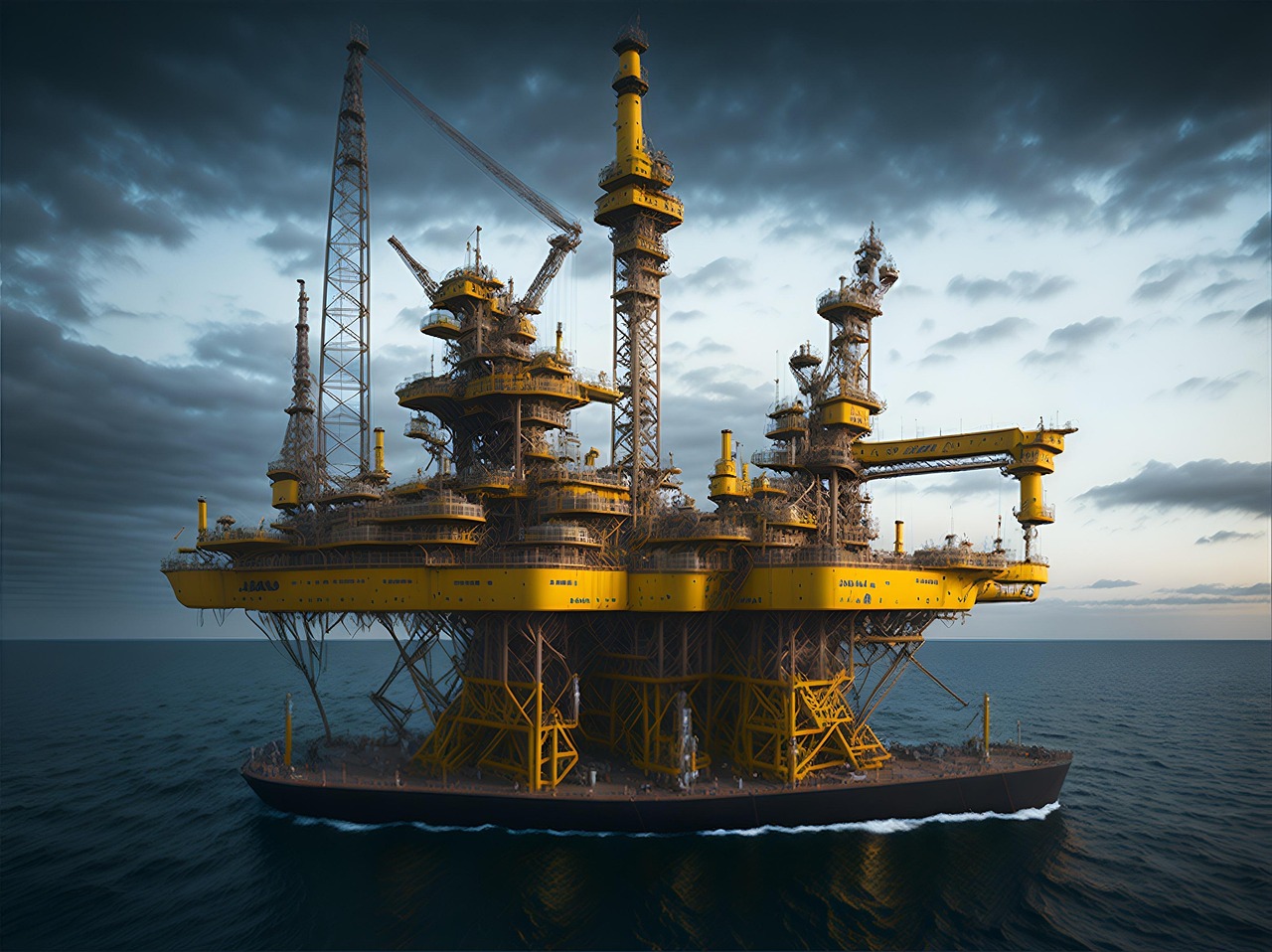
The derrick is the towering steel structure that supports vertical drilling operations. It is not just an aesthetic add but provides the height, stability, and support necessary for safe drilling.
The derrick structure in oil drilling is the towering steel structure that supports vertical drilling operations. It is not just an aesthetic add but provides the height, stability, and support necessary for safe drilling
Source: Pixabay
Functions
Supports the weight of the drill string and other equipment.
Facilitates the addition or removal of pipe sections.
Enables hoisting operations safely and efficiently.
Selection Considerations
Material strength and height must accommodate the depth of the well and the weight of the drill string.
Modern rigs may feature modular derricks for rapid assembly or relocation.
A sturdy derrick is essential for operational safety and supports efficient well completion and maintenance.
5. Hoisting, Lifting, and Safety Equipment Systems
Oil drilling often requires moving heavy tools, drill pipes, and equipment. Without reliable hoisting and lifting systems, operations can stall, and unreliable systems can create hazardous accidents.
Oil drilling often requires hoisting and safety systems in drilling to move heavy tools, drill pipes, and equipment. Without reliable hoisting and lifting systems, operations can stall, and unreliable systems can create hazardous accidents.
Key Components
Mechanical winches and steel cable systems for lifting drill strings.
Pulleys and reels to control loads precisely.
Vertical lifts or conveyors for equipment and materials.
Operational Notes
Adherence to safety protocols is vital when handling heavy loads to prevent injuries.
Modern rigs should integrate automated hoisting controls for precision and efficiency.
Along with systems to ensure loads are transported around the field securely, other key safety components include blowout preventers that limit unexpected releases from wells by using heavy-duty valves and casings that stabilize and protect the well itself.
Efficient lifting systems and safety equipment reduce downtime, prevent accidents and enable faster drilling cycles, and hence should not be merely an afterthought in drilling operations.
Conclusion
Starting an oil drilling operation requires careful planning, and having the right equipment is one of the non-negotiables. Power systems, rotary drilling components, circulation systems, derricks, and hoisting equipment form the backbone of a safe, productive drilling operation. Investing in high-quality machinery and maintaining it rigorously ensures long-term operational success.
FAQs
What is the most critical piece of equipment for a new oil drilling operation?
While all systems are essential, the rotary drilling system is often considered the heart of the operation, as it directly enables the drilling process.
How often should oil drilling equipment be inspected?
Daily visual checks, weekly operational inspections, and annual comprehensive maintenance are recommended for optimal safety and efficiency.
Can smaller rigs use the same equipment as large-scale operations?
Equipment requirements vary by well depth and production goals. Smaller rigs may use scaled-down versions of standard equipment.
Why is drilling fluid circulation so important?
Drilling fluids remove cuttings, stabilize the wellbore, and cool the drill bit, preventing accidents and ensuring operational efficiency.
What safety measures are essential for hoisting systems?
Proper training, load monitoring, routine inspections, and fail-safe mechanisms are crucial to prevent equipment failure and crew injuries.

Comments