

Key Takeaways
- Confirming mineral rights ownership requires precise review of property deeds, county records, and sometimes professional help. Investors should verify ownership status to inform energy investment strategies and avoid legal or financial risks tied to disputed or unclear title.
Introduction
If you're wondering how to find out if you own mineral rights, you're not alone. Many homeowners and landowners assume that owning property automatically means owning everything beneath it, but that's not always the case. Mineral rights can be sold, inherited, or transferred separately from the land itself.
This guide explains the difference between surface rights and mineral rights, how ownership works, and the steps you can take to determine whether you own the minerals beneath your property.
Understanding Surface Rights vs. Mineral Rights

Image generated by AI
Before researching ownership, it's important to understand the difference between surface rights and mineral rights.
What Are Surface Rights?
Surface rights give you ownership and control over the land above ground. If you own the surface rights, you can generally build a home, farm, landscape, or otherwise use the property, subject to local laws and regulations. However, owning the surface does not necessarily mean you own the resources beneath it.
What Are Mineral Rights?
Mineral rights are legal rights that allow the owner to explore for, extract, lease, or sell underground resources such as oil, natural gas, coal, and other valuable minerals. These rights can be owned separately from the surface land, meaning a different person or company may own the minerals beneath your property.
Can Surface Rights and Mineral Rights Have Different Owners?
Yes. In many states, mineral rights can be severed from surface rights through a sale, inheritance, or legal transfer. Once this happens, the surface owner may continue to own and use the land while another individual or company owns the underground minerals. This is why reviewing your deed and researching property records is essential if you want to determine whether you own your mineral rights.
Why Mineral Rights Ownership Isn’t Always Clear
Mineral rights in the United States are unique due to their potential to be legally separated (severed) from surface rights. In many regions, two different parties may own the rights to the surface land and the minerals beneath it, a concept often unfamiliar to first-time investors and even some landowners.
Severance and Historical Complexity
Mineral rights can be severed from surface rights at the time of sale or by previous owners. This separation may have happened decades (or centuries) ago, especially in regions with long histories of mining or drilling. After severance, mineral rights can be sold, inherited, divided, or even partially conveyed, leading to fractional and layered ownership.
State and county-specific property laws add to the complexity. Not all deeds clearly state whether mineral rights were reserved or conveyed. Some records lack precise legal descriptions, while others carry ambiguous language (“excepting and reserving all oil, gas, and minerals, ” for example). As a result, determining mineral rights ownership often requires more than simply reviewing a current property deed.
How to Determine If You Own Mineral Rights: Step-by-Step Guide
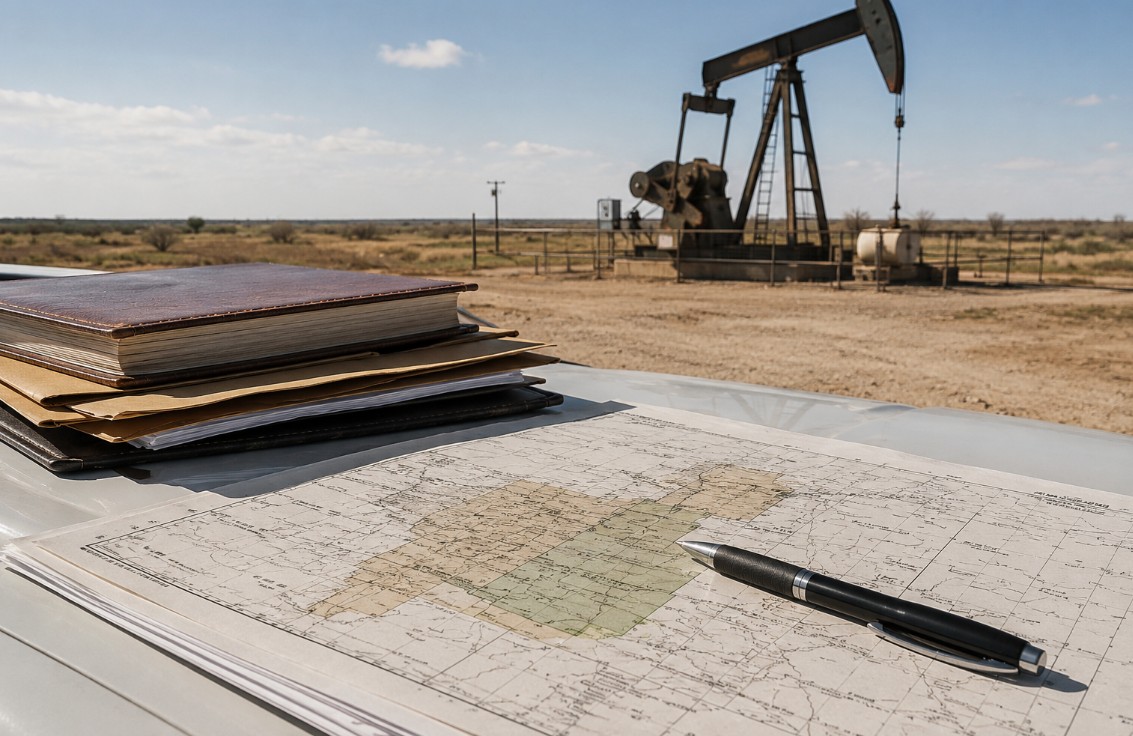
Image generated by AI
Verifying mineral rights ownership demands careful research, precise documentation, and often, expert assistance. The following steps can help property owners, heirs, and prospective buyers determine whether they own mineral rights:
1. Gather Your Property Information
Start by collecting all available documentation related to your property, including:
The most recent property deed or title commitment
Probate records if property was inherited
Lease agreements, if ever signed with an energy company
Any prior title research, surveys, or closing documents
2. Review the Current Deed and Legal Description
Examine the current deed for language specifically addressing mineral rights. The absence of mineral rights language does not mean you own them by default. Look for terms like “subject to prior reservations” or “all oil, gas, and minerals excepted, ” which indicate severance.
3. Investigate County Clerk, Recorder, or Land Office Records
All property transactions, including mineral severances, are typically filed at the county level. Visit the appropriate county clerk, recorder, or land office, some offer searchable online records, while others require in-person visits.
Search for your property using the legal land description, not just the street address.
Trace the chain of title back to the original land grant or patent.
Look for deeds that expressly reserve or convey mineral rights separately from the surface.
4. Identify Any Severance or Reservation Events
As you trace title history:
Note transactions where mineral rights were specifically reserved or conveyed.
Be alert for partial interests (e.g., “reserving an undivided one-half interest in all oil and gas”).
Capture the parties involved. Severed rights may now be held by distant descendants, trusts, or entities.
5. Search Public Databases and State Resources
Some states maintain centralized mineral ownership databases or have agencies (like Texas’s Railroad Commission or North Dakota’s Department of Mineral Resources) that provide mineral activity or registry information. Public registries and online tools can supplement local records, though completeness varies by state.
6. Confirm Title Gaps and Ownership Status
Chains of title often reveal missing or ambiguous links, especially after decades of property transfers or inheritances. Liens, tax sales, and estate settlements can further complicate the picture. If gaps or uncertainty remain, consider professional help before taking any investment action.
Mineral Rights Ownership Confirmation Checklist
Use this checklist to streamline your research process and capture critical documentation:
Collect the latest property deed and legal property description.
Review the deed for mineral rights reservations, exceptions, or conveyance language.
Access county clerk, recorder, or land office records for the property.
Trace the chain of title to identify historical mineral rights transfers.
Search available state or public mineral ownership databases.
Identify any severed mineral rights, partial interests, or title gaps.
Consult a landman or real estate attorney if ownership remains unclear or records are incomplete.
Does the Process Differ by State?
Yes. While the general process of verifying mineral rights ownership is similar across the United States, the records available, government agencies involved, and research requirements can vary significantly by state. Most ownership records are maintained at the county level, but some states also provide additional online resources or regulatory agencies that can help property owners and investors research mineral interests.
Texas
In Texas, mineral rights records are typically maintained by the county clerk where the property is located. While the Texas Railroad Commission regulates oil and gas development and maintains information about wells, drilling permits, and production activity, it does not maintain official records of mineral ownership. Property owners generally begin by reviewing county deed records and then use Railroad Commission data to identify existing or historical oil and gas activity associated with the property.
North Dakota
North Dakota offers several online resources through the Department of Mineral Resources that can help users identify drilling activity, spacing units, and production information. However, confirming ownership still requires reviewing county land records and tracing the property's chain of title to determine whether mineral rights have been severed or transferred.
Oklahoma
In Oklahoma, mineral ownership research generally starts with county clerk records, where deeds, mineral conveyances, probate filings, and lease documents are recorded. Because Oklahoma has a long history of oil and gas development, ownership can involve multiple generations of transfers and fractional interests, making title research especially important.
Pennsylvania
Pennsylvania property owners often encounter older deeds and historical reservations dating back to coal, oil, and natural gas development. County recorder offices maintain these records, but determining ownership may require reviewing documents that span many decades. In some cases, consulting a landman or real estate attorney can help resolve ambiguous title issues.
County Recorder Differences
Regardless of the state, county recorder or clerk offices remain the primary source for determining mineral rights ownership. However, every county manages records differently. Some counties provide searchable online databases with digitized deeds, while others require in-person visits or requests for archived documents. The availability, organization, and completeness of records can vary considerably, so researching mineral rights may take more time in certain jurisdictions than others.
Tip: If your state provides online mapping tools or oil and gas databases, use them to supplement your research, but always rely on county deed records and the property's chain of title to confirm legal ownership of mineral rights.
Common Mistakes When Checking Mineral Rights
Determining mineral rights ownership can be more complicated than many property owners expect. Avoiding these common mistakes can save time and help prevent incorrect assumptions about who owns the minerals beneath a property.
Assuming surface ownership includes mineral rights
Owning land does not always mean you own the minerals beneath it. Mineral rights may have been sold or transferred separately years ago.
Relying only on your current property deed
Your current deed may not show past mineral rights transfers. Review the property's full chain of title for a complete ownership history.
Searching by property address instead of the legal description
Most county records are indexed by legal description, not street address. Using the correct legal description improves search accuracy.
Overlooking probate and inheritance records
Inherited mineral rights are often transferred through probate or estate documents. These records can be essential for confirming ownership.
Depending solely on online databases
Not all historical land records are available online. Some older documents may only be accessible through county offices.
Ignoring fractional mineral ownership
You may own only a portion of the mineral rights rather than the entire mineral estate. Always verify the size of your ownership interest.
Skipping professional assistance when records are unclear
If ownership records are incomplete or conflicting, a landman or real estate attorney can help verify your mineral rights.
Professional Help: When to Consult a Landman or Attorney

Image generated by AI
Even with diligent research, mineral rights ownership can be ambiguous or disputed, particularly with older properties, complex severances, or incomplete public records. In the following scenarios, bringing in a professional is recommended:
Unclear or Missing Title Information: Historical records are incomplete, illegible, or contradictory.
Multiple Heirs or Fractional Interests: The mineral rights may have been split among several parties, or inheritance documentation is lacking.
Potential Investment or Transaction: Before investing or entering negotiations based on mineral rights, secure a clear legal opinion.
Litigation or Disputes: Ownership is actively contested or subject to legal proceedings.
Landmen, professionals specializing in title research and mineral rights verification, can efficiently navigate county records, identify gaps, and provide written reports. Licensed attorneys are essential in high-stakes evaluations, disputes, or when legal opinions on ownership, rights transfers, or title defects are needed. Before making energy investment decisions based on presumed mineral ownership, consulting these professionals can reduce risks of costly errors.
Inherited Mineral Rights and Estate Issues
Mineral rights are often inherited, either as explicit bequests in wills or implicitly through intestate succession. This introduces several additional due diligence touchpoints for investors and heirs:
How Mineral Rights Pass Through Estates
If mineral rights were owned by a deceased individual, their interest becomes part of the estate and transfers according to a will or state laws of intestate succession.
Documentation required includes probate court orders, wills, or affidavits of heirship.
Heirs must ensure ownership is properly recorded and transferred in local (county or state) records.
Importance of Timely Notification and Registration
Failure to record inherited mineral rights may result in lost income if royalties are paid to previous owners or held as unclaimed property.
States often require updating ownership records before payments or leases can be processed.
Unclaimed Property Implications
If mineral rights remain unclaimed (for instance, due to unknown heirs), associated revenues such as royalties or lease bonuses may revert to state-managed unclaimed property programs. Heirs or investors can often search state databases for unclaimed mineral interests and begin the process to establish or recover rightful ownership.
Conclusion
Mineral rights ownership is not always apparent, but it is fundamental to energy investment evaluation and property decision-making. An accurate determination involves careful deed review, thorough title research in county and state records, and, often, professional assistance from landmen or attorneys.
For investors, confirming mineral rights is a non-negotiable step to access energy opportunities and properly assess risks. Before relying on presumed mineral ownership in any energy investment decision, ensure records are clear, questions are resolved, and, when in doubt, qualified legal or title experts have reviewed your documentation.
FAQ
Can you own land without owning the mineral rights?
Yes. Mineral rights can be legally separated from surface rights, so another person or company may own the minerals beneath your property.
How do I know if I own the mineral rights to my property?
Review your property deed, search county land records, trace the chain of title, and check available state databases. If ownership is still unclear, consult a landman or real estate attorney.
Are mineral rights public record?
Yes. Mineral rights transactions are typically recorded with the county clerk, recorder, or land office where the property is located.
Can mineral rights be inherited?
Yes. Mineral rights can be passed to heirs through a will, probate, or state inheritance laws, just like other real property interests.
What happens if the mineral rights were severed?
If mineral rights were severed from the property, the surface owner does not own the underground minerals. The mineral owner retains the rights to lease, sell, or develop those resources.
Can I search for mineral rights online?
Many counties and states provide online land records or mineral databases. However, older ownership records may only be available through county offices or archived documents.
How long does it take to verify mineral rights ownership?
A basic deed review may take less than an hour, while a complete title search can take several days or even weeks, depending on the property's ownership history.
When should I hire a landman or attorney?
Consider hiring a professional if ownership records are incomplete, title history is complex, or you need to confirm mineral rights before buying, selling, or leasing property.

Comments