

Key Takeaways
- Investing in oil offers portfolio diversification and hedges against inflation, but success requires matching methods to your risk tolerance, from low-entry ETFs to high-stakes direct wells. Focus on reputable vehicles like XLE ETF or majors like ExxonMobil, always diversify, and monitor EIA forecasts for trends. Stay informed on volatility drivers like OPEC decisions.
Why Invest in Oil in 2026?
Oil remains the lifeblood of the global economy, fueling 30% of energy consumption worldwide, from aviation kerosene and diesel trucks to petrochemicals in plastics and fertilizers.
Despite the rise of electric vehicles and renewables, the U.S. Energy Information Administration (EIA) projects global oil demand to hit 103 million barrels per day in 2026, up 1.5% from 2025, driven by emerging markets like India and steady U.S. industrial use.
Supply constraints from OPEC+ production cuts and underinvestment in new fields (down 20% since 2014) keep prices in the $75-85 Brent crude range, per EIA's Short-Term Energy Outlook.
You gain powerful inflation protection: historically, oil prices outpace CPI by 2-3x during inflationary spikes, as seen in 2022 when crude surged 60% amid supply shocks. This hedges portfolios better than fixed-income assets, with energy allocations reducing overall volatility by 15% in diversified models.
Volatility creates opportunities. 2025 saw WTI swing from $65 to $95, yielding 25-40% returns for nimble traders via futures or options during geopolitical flares like Red Sea Houthi attacks.
Long-term tailwinds include U.S. shale dominance: Permian Basin output reaches 6.5 million barrels/day, supported by tech like horizontal drilling that cuts breakeven costs to $45/barrel.
Renewables capture headlines, but oil's role endures through 2040 per IMF baselines, especially in hard-to-electrify sectors like shipping and steelmaking. Beginners should allocate 5-10% here for balance, as oil correlations with stocks drop during recessions, enhancing stability.
Geopolitical premiums add upside: Ongoing U.S. sanctions on Iran and Venezuela cap 2 million barrels/day of supply, while LNG export booms tie natural gas to oil infrastructure investments.
Case study: Investors in 2022 who bought XLE during Ukraine invasion dips saw 35% gains by year-end. In 2026, watch Fed rate cuts boosting demand alongside potential Middle East escalations.
Oil price trends chart showing volatility from 2020-2026, highlighting recovery peaks and EIA projections.
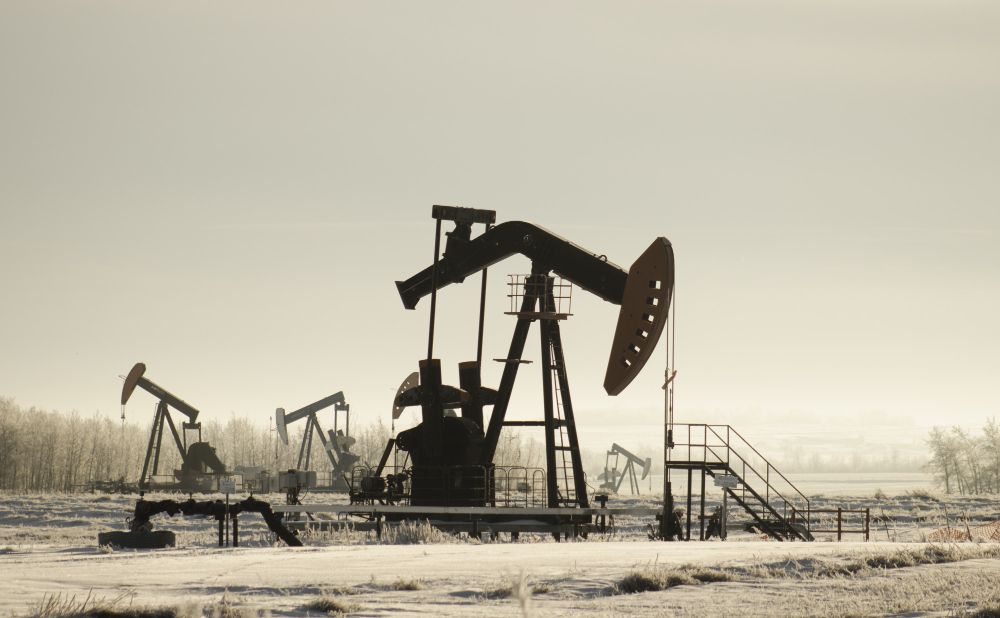
Image Credit: Freepik
Direct Investment Methods: Hands-On Exposure to Crude Prices
Direct methods give you unfiltered access to oil's spot price movements, bypassing corporate intermediaries for purer commodity plays. These suit experienced investors comfortable with leverage and margin, but they amplify both gains and losses in this high-beta asset class.
Trading Oil Futures and Options on Exchanges
Futures contracts on the CME Group's NYMEX let you bet on WTI (West Texas Intermediate) or Brent delivery up to 10 years out. One standard contract equals 1,000 barrels; at $80/barrel, notional value is $80,000, but initial margins start at 5-12% ($4,000-$9,600), with maintenance margins triggering calls if prices drop. Leverage means a 10% price rise to $88 nets $8,000 profit (200% ROI on margin), minus commissions of $2-5 per side.
Options overlay strategies: Buy calls for bullish convexity (limited loss to premium, e.g., $2,000 for a $85 strike) or puts for downside protection. Platforms like TD Ameritrade's thinkorswim or Interactive Brokers offer real-time charts, Greeks (delta, theta), and paper trading.
Real-world example: In Q4 2025, speculators rode a 15% rally from Israel-Iran tensions, averaging 30% returns, but summer oversupply crushed shorts by 25%. Beginners: Start with micro-futures (100 barrels, $500 margin) and set 1-2% risk per trade using stops. Avoid retirement accounts due to unrelated business taxable income (UBTI) rules. Volatility skew favors puts during contango (futures > spot).
Physical Oil Ownership or Storage Facilities
For tangible ownership, purchase actual crude via brokers like Gunvor or store in vaults akin to gold. A 42-gallon barrel costs $75-85 spot, but 1,000-barrel lots demand $100,000+ upfront, plus $10-25/barrel annual storage (tanks in Cushing, OK hubs). Logistics nightmares include transport via rail ($5/barrel), insurance (0.5%), and degradation (oil oxidizes over months).
Institutional play only, retail resale faces 5-10% bid-ask spreads and no liquidity. Historical quirk: Wealthy Saudis stored barrels in 2014 glut, profiting on 2018 rebound, but most face negative carry. Skip unless you're warehousing for refineries; indirect beats this 99% of the time.
Indirect Investments: Accessible Through Stocks, Funds, and MLPs
Indirect routes invest in oil's value chain, exploration, production, transport, refining, offering dividends, liquidity, and lower entry ($50-100). Ideal for beginners building core positions amid 2026's steady demand outlook.
Oil Company Stocks: Upstream, Midstream, and Downstream Leaders
Upstream explorers like ConocoPhillips (COP) thrive on high prices, with 2025 output up 8% to 1.9 million boe/day from Norway and Permian. Integrated majors ExxonMobil (XOM) and Chevron (CVX) balance via global refineries: XOM's 4.3 million barrels/day production yielded $36B free cash flow, funding 3.35% dividends (raised 4% annually for 40+ years). CVX's Hess acquisition adds Guyana's 11 billion-barrel Payara field, targeting 1.2 million bpd by 2027.fool+1
Midstream master limited partnerships (MLPs) like Kinder Morgan (KMI, 3.69% yield) and Enterprise Products (EPD, 7.1%) earn fee-based tolls on 70,000+ miles of pipelines, insulating from prices (90% contracts fixed). Refiners Valero (VLO) and Phillips 66 (PSX) profit on 3-2-1 crack spreads ($25/barrel avg. 2025), turning cheap Canadian heavy into diesel.walletinvestor+1
Top Oil Stocks Comparison (2026 Data)
Company | Market Cap | Dividend Yield | 1-Year Return | P/E Ratio | Focus Area & Key Stat |
ExxonMobil (XOM) | $632B | 3.35% | 18% | 12.5 | Integrated; 25B boe reserves |
Chevron (CVX) | $280B | 4.2% | 12% | 11.8 | Integrated; Guyana 11B barrels |
Kinder Morgan (KMI) | $70.5B | 3.69% | 25% | 18.2 | Midstream; 90% fee-based revenue |
Valero (VLO) | $45B | 3.2% | 15% | 9.5 | Refining; 3.2M bpd capacity |
Buy via commission-free brokers; DRIPs compound yields. Risks: Debt in downturns (e.g., Occidental's 2020 spike), but cash-rich majors weather storms.
ETFs and Mutual Funds: Effortless Diversification Baskets
Energy Select Sector SPDR (XLE) tracks 22 S&P energy stocks (top: XOM 23%), with 0.09% expense and $90/share, up 22% in 2025 on rallies. United States Oil Fund (USO) rolls WTI futures, capturing contango/backwardation (lost 5% to roll yield in 2025). Broader Vanguard Energy ETF (VDE, 0.10% fee) holds 110 names, including services like SLB.etfdb+1
Active mutual funds like Fidelity Select Energy Portfolio (FSENX) beat benchmarks by 3% annually via picks like EQT. ETFs shine for IRAs (tax-deferred), trading intraday with 1M+ volume. In 2026 forecasts, XLE could gain 15-20% if oil averages $80, per analyst consensus. Pair with GLD for commodity balance.
Energy sector ETF performance comparison, 2022-2026, with XLE vs. USO (alt: oil-etfs-performance-2026.png).
Advanced Options: Royalties, Working Interests, and Private Wells
High-net-worth accredited investors (>$1M assets ex-home or $200K income) unlock private oil assets for 15-50% IRRs, dwarfing public markets but with illiquidity.
Working Interests in Drilling Partnerships
Pool funds for wells via operators; claim 70-100% intangible drilling costs (IDCs) as tax deductions, e.g., $100K investment deducts $85K Year 1. Successful Permian horizontals yield 30-60% first-year payout, depleting to 10% ongoing. Platforms like Yieldstreet or EnergyFunders syndicate deals ($25K min).
Risks: 20-35% dry holes, even with 3D seismic (90% success rates). Operators (e.g., Crown Exploration) manage and review JOA agreements for liability caps. 2025 example: Eagle Ford deals returned 25% net amid $75 prices. Hold 3-7 years; SEC Reg D exempts from full registration.
Royalty Interests and Mineral Rights
Buy non-operating royalties (2-25% of production revenue) or minerals outright, no capex, pure cashflow. Yields 8-20% net, hedged by fixed terms. Texas auctions sold $500M in 2025; platforms like Pheasant Energy start at $50K. Transferable like stocks, but title searches are essential to avoid disputes.kingdomexploration+1
Pros: Inflation-linked (royalties rise with prices), estate-planning friendly. Case: Bakken royalties averaged 12% over 5 years. Verify via county records and production data from Enverus.
Key Risks and Mitigation Strategies for Oil Investing
Image Credit: Freepik
Oil's beta exceeds 1.5, with 2020's 50% crash and 2022's 100% rebound underscoring swings from recessions (demand drops 5M bpd), EVs (1M bpd displacement by 2030), and oversupply (OPEC floods). Direct: Operational (dry holes 30%, blowouts), regulatory (methane fees, frack bans). Indirect: Company bankruptcies (e.g., Chesapeake 2020), MLP K-1 tax hassles.
Comprehensive Mitigation Toolkit:
Allocation Cap: 5-10% max; models show it boosts the Sharpe ratio by 0.2.
Hedging Tools: Buy puts or pair with natural gas ETFs (UNG).
Technical Aids: Trailing stops (10-15%), RSI<30 buy signals.
Fundamental Monitors: EIA Weekly Petroleum Status, CFTC COT reports (net longs >200K signal tops).
Diversification Mix: 40% majors, 30% ETFs, 20% midstream, 10% futures/royalties.
Tax Optimization: Harvest losses, max IDCs/Depletion for directors.
Dollar-cost average: $10K monthly into XLE captured 18% annualized 2020-2025. Stress-test via Portfolio Visualizer.
Step-by-Step: How to Get Started Investing in Oil Today
Profile Assessment (1 Day): Quiz risk tolerance on Morningstar or Vanguard, conservative? ETFs only. Define goals: income (MLPs), growth (futures).
Account Setup (1 Hour): Open at Fidelity/Schwab (0 fees, EIA data integrations); fund IRA for tax perks.
Research Deep Dive (1 Week): Baseline EIA STEO forecasts, scan Finviz for stocks (P/E<15), Barchart for futures curves.
Initial Position (Day 1): $1K into XLE/VDE; set alerts at $70/$90 oil.
Build and Monitor (Ongoing): DCA $500/month; quarterly rebalance to 7% target.
Scale Advanced (6+ Months): Vet well operators via SEC EDGAR/Form 10-Ks; join investor webinars.
Exit Rules: Sell if allocation >12% or oil <$50 sustained.
Example: $10K XLE stake Jan 2025 grew to $12.2K by Dec (+22%), dividends reinvested. Tools: TradingView scripts, Yahoo Finance screeners. Track ROI vs. S&P.
Conclusion
Mastering how to invest in oil means blending accessibility (ETFs/stocks) with opportunity (direct/royalties), tailored to 2026's supply discipline and demand resilience. U.S. shale, dividends, and volatility reward the prepared; stay ahead with EIA, OPEC trackers, and diversified entries. Want more insights like this? Subscribe to Invest In Energy’s newsletter for weekly updates.
FAQs
What is the easiest way for beginners to invest in oil?
Oil ETFs like XLE or USO offer simple exposure without futures complexity. Buy via any brokerage; low fees (0.09%) and liquidity suit starters. Track spot prices indirectly via daily trades. Returns mirror sector without picking winners, perfect for $100 starts.
Are oil stocks a good long-term investment in 2026?
Yes, majors like ExxonMobil provide dividends (3%+) and production growth amid steady demand. Vertical integration buffers price drops; Permian expansions boost output to 6.5M bpd. Outperform S&P in recoveries; hold 5+ years with DRIPs.
What are the risks of investing directly in oil wells?
Geological dry holes (up to 30%), price swings, regs changes, and ops costs. Tax benefits offset some, but only for accredited investors; expect illiquidity and 3-7 year holds. Partner with vetted operators; review decline curves.
How do oil futures differ from ETFs?
Futures use leverage for direct price bets, risking quick losses/margin calls and expirations. ETFs hold contracts passively, mimicking prices with less hassle, ideal for non-traders, no margin needed. Roll yield impacts long-term holds.
Can I invest in oil with little money?
Yes, stocks/ETFs start at $50-100/share. Avoid futures ($5K+). MLPs offer yields from $1K positions. Build gradually with dividend reinvestment for compounding; fractional shares via Robinhood.

Comments