


Key Takeaways
- Making smarter decisions in oil markets requires looking beyond crude oil prices and understanding the factors that drive them, including supply-demand balances, inventory levels, OPEC policy decisions, and geopolitical developments. Different oil investments, from futures and ETFs to energy stocks and midstream assets—respond differently to changing market conditions, making asset selection just as important as market direction. Investors who monitor key indicators such as futures curves, crack spreads, and inventory trends are often better positioned to identify opportunities and manage risk. Ultimately, successful oil investing depends on understanding market cycles, maintaining disciplined risk management, and making decisions based on fundamentals rather than short-term price movements.
Introduction
Oil investments refer to financial instruments whose value is directly or indirectly linked to crude oil prices, production volumes, or energy-sector cash flows. These investments range from crude oil futures to oil ETFs, upstream exploration and production stocks, integrated oil majors, pipeline infrastructure, refining businesses, and royalty trusts.
Crude oil remains one of the most important commodities in the global economy. According to the U.S. Energy Information Administration, global petroleum consumption averages 102 million barrels per day in 2024, making oil a major driver of inflation, trade balances, and corporate profitability.
For investors, oil investments serve multiple purposes. They can provide inflation protection, dividend income, commodity exposure, and geopolitical risk hedging. This guide explains how oil markets work, the main ways to invest in oil, and which investment vehicles may best fit your portfolio strategy.
What Are Oil Investments?
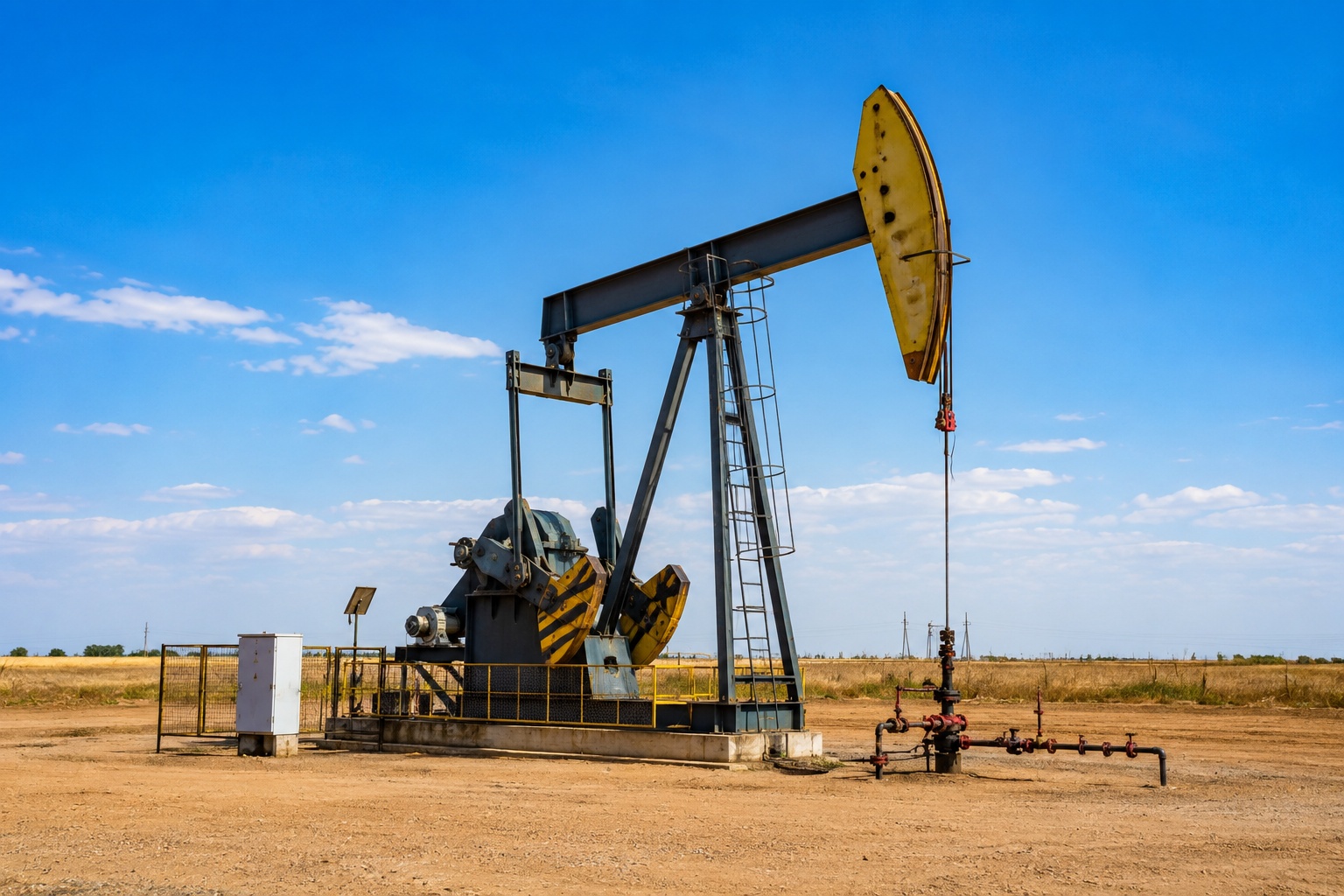
Image created by AI
Oil investments are defined as assets whose value depends on crude oil prices, production economics, or energy infrastructure revenues. Some investments offer direct exposure to oil prices. Examples include West Texas Intermediate (WTI) futures contracts and oil-focused exchange-traded funds such as the United States Oil Fund (USO). Others provide indirect exposure through company earnings, such as ExxonMobil (XOM), Halliburton (HAL), or Kinder Morgan (KMI).
The oil market is typically divided into three segments of the value chain:
Upstream: Upstream oil and gas production target exploration and production. These companies drill wells, extract crude oil, and sell raw production into global markets.
Midstream: Midstream market takes care of oil transportation, storage, and processing. These businesses operate pipelines, export terminals, and storage facilities.
Downstream: Downstream oil market deals with crude oil refining and marketing. These companies convert crude oil into gasoline, diesel, jet fuel, and petrochemical products. Integrated oil majors operate across all three segments, which helps reduce earnings volatility across commodity cycles.
What Should You Understand About the Oil Market Before Investing?
Before choosing an oil investment, you need to understand what drives crude oil prices. Every oil investment vehicle responds differently to supply shocks, demand growth, and policy decisions. Crude oil prices are largely determined by global supply and demand. Supply is heavily influenced by OPEC and OPEC+, which collectively account for a major share of global crude production. Non-OPEC supply growth is increasingly driven by U.S. shale production. Demand is led by major consuming economies including the United States, China, and India. Economic growth, industrial activity, transportation demand, and seasonal consumption patterns all influence crude demand.
Other major oil price drivers include:
U.S. dollar strength (DXY index)
Weekly EIA Petroleum Status Reports
Federal Reserve interest rate policy
Geopolitical disruptions in the Middle East and Russia
CFTC Commitments of Traders (COT) speculative positioning
If you understand these drivers, you can better evaluate whether your oil investment thesis is based on price momentum, dividend income, infrastructure stability, or long-term energy demand trends.
Key Indicators Smart Oil Investors Monitor
Making smarter decisions in oil markets requires more than tracking headline crude prices. Professional investors monitor a range of market indicators that reveal whether supply and demand conditions are tightening or loosening beneath the surface. These indicators often provide earlier signals than price movements alone.
WTI-Brent Spread
The difference between West Texas Intermediate (WTI) and Brent crude prices can reveal regional supply imbalances and transportation bottlenecks. A widening spread often suggests excess supply in North America, while a narrowing spread may indicate stronger U.S. demand or improved export capacity.
Futures Curve Structure
The shape of the oil futures curve provides valuable information about market expectations.
Backwardation occurs when near-term contracts trade above future contracts, often indicating tight supply conditions and strong immediate demand.
Contango occurs when future contracts trade above spot prices, typically reflecting abundant supply or weaker demand expectations.
Many institutional investors view the futures curve as one of the clearest indicators of underlying market fundamentals.
Crack Spreads
Crack spreads measure the difference between crude oil prices and the value of refined products such as gasoline and diesel. Rising crack spreads generally indicate strong refining margins and healthy end-user fuel demand, while declining spreads may signal weakening consumption.
EIA Petroleum Status Reports
The U.S. Energy Information Administration publishes weekly inventory data covering crude oil, gasoline, and distillate fuel stocks. Large inventory builds often pressure prices, while sustained inventory draws can indicate tightening market conditions.
U.S. Rig Counts
Published weekly by Baker Hughes, rig count data provides insight into future production trends. Rising rig activity typically signals growing supply potential, while declining rig counts may suggest future production constraints.
OPEC Spare Capacity
Spare production capacity held by OPEC members serves as a critical market buffer. Low spare capacity can increase price volatility because markets become more vulnerable to geopolitical disruptions or unexpected supply outages.
OECD Commercial Inventories
Global oil inventories provide one of the most important measures of market balance. Falling inventories often indicate demand is exceeding supply, while rising inventories suggest the opposite. Many energy analysts use inventory trends as a leading indicator of future price direction.
Understanding these indicators helps investors evaluate whether market conditions support higher prices, lower prices, or a more balanced outlook before making capital allocation decisions.
Crude Oil Futures Are The Real Investment Vehicle
Crude oil futures are the most direct way to invest in oil prices. A standard WTI crude oil futures contract traded on NYMEX represents 1,000 barrels of oil delivered to Cushing, Oklahoma. At $80 per barrel, one contract controls $80,000 of oil exposure.
Brent crude futures (ICE: BRN) work similarly and track the international oil benchmark. According to CME Group, margin requirements usually range between approximately $4,000 and $7,000 per contract, depending on volatility and exchange requirements. This creates substantial leverage. A $5 move in oil prices creates a $5,000 gain or loss per contract. That level of volatility makes futures highly efficient for professionals, but risky for inexperienced investors. However, comparison between WTI and Brent futures can give a comprehensive overview for informed decision-making.
Crude oil futures are best suited for:
Experienced traders
Institutional investors
Hedge funds
Oil producers hedging production
Airlines or refiners hedging procurement costs
Retail investors should approach futures carefully because leverage, margin calls, and contract rollover can create losses quickly.
Micro WTI futures (NYMEX: MCL) represent 100 barrels instead of 1,000. They offer lower margin requirements and a more accessible entry point for smaller investors seeking direct oil exposure.
Which Oil ETFs Offer the Best Market Exposure?
Oil Exchange-Traded Funds (ETFs) provide easier access to oil investing without futures accounts or physical delivery concerns. You can buy and sell them through a standard brokerage account like regular stocks.
United States Oil Fund (USO)
USO tracks near-month WTI crude futures. It is widely used for short-term tactical trading, but it is not ideal for long-term holding because of contango drag. Contango happens when future oil contracts cost more than current spot prices. During monthly rollovers, USO must sell lower-priced contracts and buy higher-priced ones, which gradually erodes returns.
ProShares Ultra Bloomberg Crude Oil (UCO)
UCO gives 2x leveraged daily exposure to crude oil futures. It is designed for short-term traders only. Daily rebalancing creates performance decay over longer holding periods.
ProShares UltraShort Bloomberg Crude Oil (SCO)
It provides inverse 2x daily exposure. It is used when investors expect oil prices to fall and carries the same short-term trading limitations as UCO.
Energy Select Sector SPDR Fund (XLE)
XLE offers diversified exposure to U.S. energy companies rather than direct oil-price tracking. Its largest holdings are typically ExxonMobil (XOM) and Chevron (CVX), which often make up more than 40% of the fund. For many retail investors, XLE is the most practical long-term oil investment ETF because it combines energy exposure with dividends and company fundamentals.
iShares U.S. Oil & Gas Exploration & Production ETF (IEO)
It focuses on upstream E&P companies such as ConocoPhillips (COP), Devon Energy (DVN), and Pioneer Natural Resources. It has higher sensitivity to oil prices than XLE because producers respond more directly to crude price movements.
VanEck Oil Services ETF (OIH)
It specializes in oilfield services companies such as Schlumberger (SLB), Halliburton (HAL), and Baker Hughes (BKR). It performs best when drilling activity and rig counts are rising.
What Risks Should Investors Understand Before Investing in Oil?
Every oil investment carries risk, but the risk depends on what you own. A futures contract behaves very differently from a dividend-paying pipeline company.
Price Volatility
Price volatility is the most immediate risk. Crude oil is one of the most volatile major commodities in global markets. During April 2020, WTI crude briefly settled at negative $37.63 per barrel during the COVID-19 demand collapse, while prices later moved above $120 per barrel during the 2022 supply shock linked to Russia’s invasion of Ukraine. This range shows how quickly sentiment can reverse. If you hold futures, leveraged ETFs, or high-beta E&P stocks, these moves can create rapid gains, but also severe losses.
Contango Drag
Contango drag affects futures-based oil ETFs like USO. When future-month contracts trade above spot prices, the fund must repeatedly sell lower-priced contracts and buy higher-priced ones during rollovers. This creates performance erosion over time, even if spot oil prices remain relatively stable. It is one reason why short-term trading ETFs are often poor long-term investment vehicles.
OPEC and Political Risk
Oil prices are heavily influenced by decisions from OPEC and OPEC+, not just normal market supply and demand. Unexpected production cuts, quota changes, sanctions, or geopolitical disruptions in the Middle East can move prices overnight. These events often bypass technical analysis and company fundamentals entirely. For investors, this means oil markets can react to headlines faster than balance sheets.
Energy Transition Risk
Long-term structural demand is another major concern. Electric vehicle adoption, renewable energy investment, stricter emissions standards, and carbon pricing policies all create uncertainty around future oil demand. According to the International Energy Agency (IEA), long-term oil demand growth may slow as energy systems diversify. This does not eliminate oil demand, but it changes how investors should evaluate long-duration oil assets.
H3. Regulatory and ESG Pressure
Oil companies also face regulatory and ESG-related risks. Carbon taxes, drilling restrictions, methane rules, permitting delays, and investor pressure from institutional ESG mandates can raise costs and reduce access to capital. This is especially important for upstream companies with long project timelines. A profitable field still depends on policy approval and financing access.
How Professional Investors Make Smarter Decisions in Oil Markets

Image Created by AI
Successful oil investing is rarely about predicting the exact direction of crude prices. Instead, experienced investors focus on evaluating market conditions, identifying risk-reward opportunities, and selecting the investment vehicle most appropriate for a specific market environment.
Understand Where the Market Sits in the Cycle
Oil markets tend to move through recurring cycles of oversupply, rebalancing, tightening, and eventual demand destruction.
During oversupply periods, inventories rise and prices often weaken. As production slows and demand recovers, the market enters a rebalancing phase. Tight markets emerge when inventories fall and spare production capacity declines, often supporting higher prices. Eventually, elevated prices can reduce consumption and encourage new supply growth, restarting the cycle.
Identifying the current phase of the cycle can help investors avoid chasing momentum and instead position ahead of major market shifts.
Match Investments to Market Conditions
Different oil investments perform differently depending on the market environment.
Market Environment | Investment Vehicle Often Favored |
|---|---|
Rising Oil Prices | Exploration & Production Companies |
Stable Oil Prices | Integrated Oil Majors |
Income-Focused Strategy | Midstream Pipeline Operators |
Short-Term Trading Opportunities | Oil Futures and Options |
Refining Margin Expansion | Downstream Refiners |
Rather than treating all oil investments as identical, investors often allocate capital based on the specific drivers influencing each segment of the value chain.
Focus on Valuation, Not Just Oil Prices
High oil prices do not automatically make an oil company attractive. Investors often analyze metrics such as free cash flow generation, dividend sustainability, balance-sheet strength, reserve replacement rates, and break-even production costs.
Companies capable of generating attractive returns at lower oil prices are generally better positioned to withstand future commodity downturns.
Use Scenario Analysis
Professional investors frequently evaluate how different oil-price environments may impact portfolio performance.
Average Oil Price | Potential Beneficiaries |
|---|---|
$50 per Barrel | Integrated Majors and Midstream Operators |
$70 per Barrel | Broad Energy Sector |
$90 per Barrel | Upstream Producers |
$120+ per Barrel | High-Beta Exploration Companies |
Scenario analysis helps investors prepare for multiple outcomes rather than relying on a single market forecast.
Prioritize Risk Management
Oil markets are influenced by geopolitical events, policy decisions, economic growth, weather disruptions, and technological developments. Position sizing, diversification across energy subsectors, and ongoing monitoring of supply-demand fundamentals can help investors manage these risks more effectively.
The most successful oil investors are often those who focus as much on protecting capital as they do on generating returns.
Conclusion
Oil investments offer one of the broadest opportunity sets in global markets, but they are not one-size-fits-all. The best oil investment is the one that matches your objective, your risk tolerance, and your time horizon. Oil remains central to transportation, manufacturing, and global trade. Even as the energy transition accelerates, investors who understand oil market structure, capital discipline, and macroeconomic drivers will continue to find opportunities across the sector.

Comments