


Key Takeaways
- Modern oil drilling is a carefully engineered, multi-stage process that extends far beyond simply drilling into the ground. From wellbore construction and completion to decades of managed production and responsible abandonment, each phase relies on advanced technology, strict safety systems, and detailed geological planning. For investors and industry observers, understanding this lifecycle provides valuable insight into project timelines, capital intensity, operational risks, and long-term asset performance in today’s energy sector.
Inside the Modern Journey of Extracting Oil: Drilling Process Explained
The oil drilling process is a highly engineered, multi-stage operation that extends far beyond simply drilling into the ground and pumping hydrocarbons to the surface. Modern oil extraction integrates subsurface geology, mechanical engineering, real-time data systems, and strict safety controls to access reservoirs that often lie thousands to tens of thousands of feet below the surface.
Today’s wells, especially horizontal and offshore wells, are designed using advanced seismic imaging, pressure modeling, and drilling automation to maximize recovery while minimizing environmental and operational risk.
This guide walks through the oil drilling process step by step, explaining how wells are drilled, completed, produced, and ultimately retired which provides clarity for professionals, investors, and anyone seeking to understand how a single barrel of oil reaches the market.
1. Drilling the Wellbore
Drilling the wellbore is the foundation of the oil drilling process. It begins with site preparation and rig construction, followed by drilling a precisely engineered hole into the subsurface using a rotating drill bit connected to a drill string made up of steel pipe sections.
Modern wells can be vertical, directional, or horizontal, depending on reservoir geometry. Horizontal wells, now standard in shale plays, can extend laterally for 1–3 miles, dramatically increasing reservoir contact and production efficiency.
Drilling timelines vary widely. A shallow onshore well may take weeks, while complex offshore or deep horizontal wells can take several months to over a year, depending on geological conditions.
Wellbore Structure and Integrity
As drilling progresses, operators install steel casing at multiple depths. Each casing string is cemented in place to:
Stabilize the wellbore
Isolate underground formations
Protect freshwater aquifers
Prevent pressure migration and leaks
Drill bits range from 5 inches to over 50 inches in diameter, becoming progressively smaller as the well deepens. This telescoping design is critical for maintaining structural integrity at extreme depths and pressures.
The Role of Drilling Mud
Through drilling, the well is filled with drilling mud, a mix of fluids and minerals that helps lubricate and cool the bit. This circulation of drilling mud is essential to the drilling process as it
Controls subsurface pressure, preventing formation fluids from entering the wellbore
Cools and lubricates the drill bit, reducing wear and failure
Carries rock cuttings to the surface for disposal and geological analysis
Stabilizes the wellbore walls, especially in fragile formations
Mud systems are carefully engineered using water-based, oil-based, or synthetic fluids depending on depth, pressure, and environmental regulations. Mud weight and composition are constantly adjusted in real time to avoid dangerous pressure imbalances that could lead to kicks or blowouts.
As the well deepens, new drill pipe sections are added through a process known as “making a connection,” allowing drilling to continue incrementally.
Source: Pexels
2. Completing the Well
Once the well reaches its target depth, drilling operations pause and the well enters the completion phase, where it is prepared for safe and controlled production. This stage typically takes two to four weeks, depending on well complexity.
Completion ensures the well can flow hydrocarbons efficiently while maintaining long-term structural integrity. Key completion steps include:
Perforating the casing: Essentially, punching the casing and cement sheath installed with explosive charging to allow the oil or gas to easily flow between the wellbore and the reservoir.
Cleaning of the Well: This can include adding gravel or sand screens to filter debris and the circulation of cleaning liquids such as heavy brine to remove any remaining unwanted material.
Hydraulic fracturing: When required stimulation by pumping high-pressure fluids, acid, or water to clean and fracture the rock is done to improve the flow of hydrocarbons.
Installing production tubing: Essential infrastructure, such as the wellhead, valves, and fittings are installed that channels hydrocarbons to the surface and facilitates the collection of the product.
At the end of this stage, the well is mechanically complete, pressure-tested, and ready for production.
3. Production Phase
This is where oil and gas are actually brought to the surface. However, before collecting oil for production, testing of the flow and monitoring the levels can take place for several further months. Additionally, flowback of debris and fluids after fracturing also needs to be captured and disposed of to ensure smooth production.
How oil flows upward
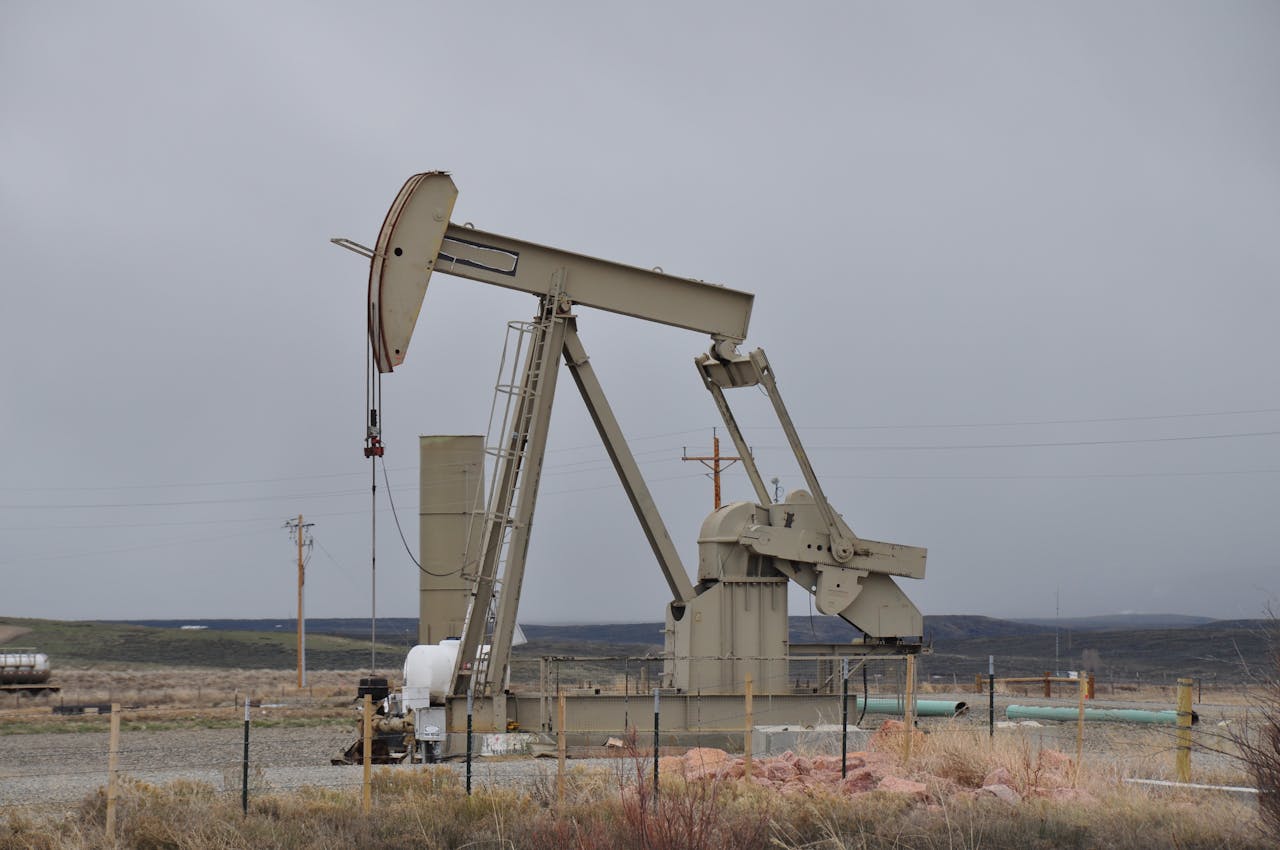
Once completion, flowbacks, and testing are completed, oil production actually begins. Many reservoirs have natural pressure strong enough to push hydrocarbons upward. Older or low-pressure wells use artificial lift systems, such as pumpjacks, to enhance the flow. A single, commercially viable well can produce for decades, depending on reservoir size and pressure.
Source: Pexels
4. Abandonment
A well reaches abandonment when production declines to the point where operating costs exceed revenue. Regulatory agencies require operators to permanently and safely close wells to prevent environmental contamination.
Responsible Abandonment Steps
Removal of production tubing and equipment
Placement of multiple cement plugs to isolate formations
Welding and sealing a steel surface cap
Site remediation and land restoration
Proper abandonment protects groundwater, prevents methane leakage, and ensures long-term environmental safety. The International Association of Oil & Gas Producers (IOGP) emphasizes that abandonment planning is now integrated into well design from the very beginning.
Conclusion
The modern oil drilling process is a highly coordinated journey combining geology, engineering, technology, and environmental safety. From drilling the wellbore and completing the well to decades of production and responsible abandonment, each stage ensures hydrocarbons are extracted efficiently, safely, and sustainably.
Understanding this process is critical not only for manufacturers and enterprises but also for investors evaluating timelines, risks, and obstacles to success. The complexity behind the production of every barrel of oil underscores the importance of careful planning, advanced equipment, and regulatory compliance in today’s energy industry.
FAQs
1. What is the first step in the oil drilling process?
The first step is drilling the wellbore using a rotating drill bit, inserting casing, and circulating drilling mud to maintain pressure and remove rock cuttings.
2. What is well completion?
Well completion prepares the well for production by perforating casing, adding screens, cleaning or fracturing the rock, and installing production tubing.
3. How is oil brought to the surface?
Oil flows naturally if the reservoir has sufficient pressure. In low-pressure wells, artificial lift systems like pumpjacks or submersible pumps are used.
4. How long can an oil well produce?
A well can produce for decades, depending on reservoir size, pressure, and economic viability.
5. What happens when a well is no longer productive?
Wells are properly abandoned by removing tubing, cementing key sections, capping with steel, and restoring the site to prevent contamination.

Comments