


Key Takeaways
- Oil well investment gives accredited investors direct exposure to oil and gas production revenues rather than indirect exposure through stocks or ETFs. Current oil prices remain well above core U.S. shale breakeven levels, creating attractive economics in major producing regions such as the Permian Basin. Investors may also benefit from unique tax advantages including intangible drilling cost deductions and depletion allowances. However, successful oil well investing requires careful evaluation of operator quality, well economics, commodity price risk, and long-term illiquidity before committing capital.
Introduction
Investing in oil wells refers to the direct participation in crude oil and natural gas production through ownership stakes in individual wells, drilling programs, or working interest arrangements, as distinct from buying oil stocks, ETFs, or futures contracts. Oil well investments give investors direct exposure to production revenues, reserves-based asset values, and a suite of tax advantages that are unavailable through any other oil investment vehicle.
The United States oil well investment market is centered on three primary producing regions: the Permian Basin of West Texas and New Mexico, the Eagle Ford Shale in South Texas, and the Bakken Formation in North Dakota, alongside conventional and unconventional plays in the Anadarko Basin, Haynesville Shale, DJ Basin, and Appalachian Basin. Direct oil well investments are available to accredited investors through working interest programs, drilling partnerships, private equity-backed E&P companies, and direct participation programs (DPPs) structured as limited partnerships.
Seven converging factors, spanning oil price fundamentals, tax policy, energy security dynamics, technological efficiency gains, supply underinvestment, LNG export growth, and domestic energy policy, make the current period a particularly compelling window for oil well investment consideration.
What Is Oil Well Investment?
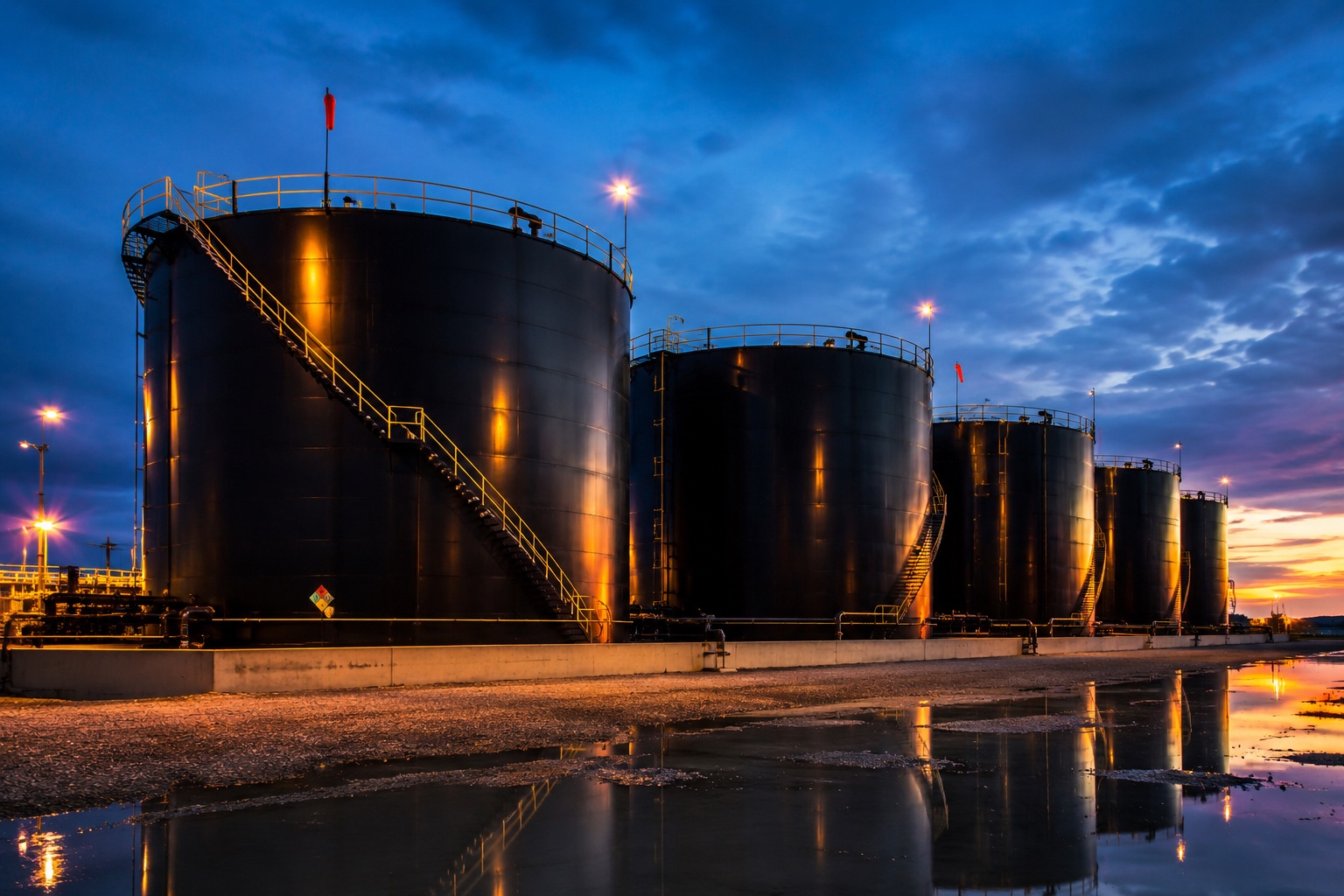
Image Generated by AI
Oil well investment is defined as the direct ownership of a financial interest in the drilling, completion, and production operations of one or more oil and gas wells. Unlike purchasing shares of ExxonMobil (XOM) or units of the Energy Select Sector SPDR Fund (XLE), which provide indirect exposure to oil prices through company earnings, oil well investments give investors a direct working interest or royalty interest in physical production assets whose revenues flow proportionally to interest holders as crude oil and natural gas are extracted and sold. For a broader comparison of investment approaches, see our analysis of whether oil is a good long-term investment.
The two primary forms of direct oil well investment are working interests and royalty interests. A working interest entitles the holder to a proportional share of production revenues and obligates them to pay a proportional share of drilling, completion, and operating costs. A royalty interest entitles the holder to a percentage of production revenues without any corresponding obligation to share in costs, making royalty interests a passive, lower-risk form of oil well investment at the cost of a lower revenue percentage.
Oil well investments are typically structured as direct participation programs (DPPs), limited partnerships, or joint ventures between accredited investors and an operating company, known as the operator, that manages drilling, completion, production, and regulatory compliance on behalf of all interest holders.
How Oil Well Investments Work
Oil well investments work through a defined sequence of phases: drilling, completion, production, and eventual abandonment or workover. Each phase has distinct cost and revenue characteristics that determine the investment's return profile. Understanding how upstream oil and gas production shapes the entire energy value chain is essential context for evaluating these phases.
The drilling phase involves the physical construction of the wellbore from surface to the target formation, typically a horizontal well with a lateral length of 10,000–15,000 feet in major shale plays. Drilling costs for a typical Permian Basin horizontal well range from $4 million to $8 million depending on depth, lateral length, and wellbore complexity. Investors in the working interest bear their proportional share of these drilling costs, and it is precisely these costs that generate the most significant tax benefits of oil well investment.
The completion phase involves hydraulic fracturing of the horizontal wellbore, pumping large volumes of water, sand, and chemical additives at high pressure to create fractures in the target formation (Wolfcamp, Spraberry, Bone Spring in the Permian Basin; Austin Chalk, Eagle Ford in South Texas) that allow hydrocarbons to flow into the wellbore. Completion costs typically equal or exceed drilling costs, running $4 million to $10 million for a typical Permian Basin well, and are subject to the same intangible drilling cost (IDC) tax treatment as drilling costs.
The production phase generates revenue for working interest holders as crude oil and natural gas flow from the well and are sold at prevailing market prices. Production rates follow a characteristic hyperbolic decline curve: production is highest immediately after completion and declines rapidly in the first year (typically 60–80% in year one for shale wells) before stabilizing at a lower but more durable rate. Operators publish monthly production reports that allow investors to track well performance against type curve projections.
The economics of a typical Permian Basin horizontal well at $75 WTI are approximately as follows: gross well revenue of $15–$25 million over a 20–30 year producing life, total well cost (drilling plus completion) of $8–$15 million, lifting costs (lease operating expenses) of $8–$12 per barrel, and net revenue to working interest holders after royalties of 75–80% of gross production value. At these economics and current WTI prices, core Permian Basin wells generate returns of 30–60% IRR (internal rate of return), among the highest risk-adjusted returns available in direct commodity investment.
Oil Well Investments vs Oil Stocks vs ETFs
Investors seeking exposure to the energy sector can choose between direct oil well investments, oil company stocks, energy ETFs, or royalty interests. Each option offers a different balance of risk, liquidity, income potential, and tax treatment.
Direct oil well investments provide ownership in producing assets and allow investors to participate directly in production revenues. Working interest owners may benefit from substantial tax deductions, but they also assume operational and commodity price risks.
Oil stocks provide indirect exposure through publicly traded companies whose performance depends not only on oil prices but also on management decisions, debt levels, capital allocation strategies, and broader stock market conditions.
Energy ETFs offer diversified exposure across multiple companies and are generally the most liquid option, though they lack the tax advantages and direct income potential of oil well ownership.
Royalty interests provide passive income from production without responsibility for drilling or operating expenses, making them lower risk but generally lower return than working interests.
For investors seeking direct commodity exposure and tax efficiency, oil well investments occupy a unique position that cannot be fully replicated through traditional securities.
Reason 1: Compelling Well Economics at Current Oil Prices
The first and most fundamental reason to consider oil well investment now is the favorable spread between current WTI crude oil prices and Permian Basin production costs, a spread that is generating strong economic returns for well operators and working interest investors.
WTI crude oil has traded in the $70–$90 per barrel range for the majority of 2023 and 2024, while Permian Basin breakeven costs, the all-in cost per barrel required for a new well to generate a positive return, have declined to approximately $40–$55 per barrel in core Midland and Delaware sub-basin acreage. This $20–$45 per barrel profit margin is wider than at any previous period in U.S. shale history when measured against breakeven costs, reflecting a decade of technology improvement, efficiency gains, and cost discipline by operators including Diamondback Energy (FANG), Devon Energy (DVN), and ConocoPhillips (COP). For a full picture of what drives these price dynamics, see our guide on what drives crude oil prices in financial markets.
The Eagle Ford Shale breakeven costs range from $45–$65 per barrel depending on sub-play and operator. The Bakken Formation in North Dakota has breakeven costs of approximately $55–$70 per barrel, somewhat higher than the Permian due to colder climate operating conditions and longer takeaway distances to market.
At current price levels, a typical Permian Basin working interest investment in a well with $10 million total cost and $75 WTI generates a projected payback period of 18–30 months, meaning investors recover their full capital commitment within two to two and a half years before the well enters a long-tail production phase that continues generating cash flow for 20–30 years. This payback profile is significantly more favorable than the 3–5 year paybacks common during the $50–$60 WTI environment of 2016–2019.
Reason 2: Exceptional Tax Advantages Unavailable in Other Investments
The second compelling reason to invest in oil wells now is the U.S. tax code's treatment of oil and gas well investments, a set of provisions that are unique to the energy sector and unavailable in virtually any other investment category.
Intangible Drilling Costs (IDCs) are the most significant oil well tax benefit. IDCs include all costs associated with drilling and completing a well that have no salvage value, such as labor, chemicals, mud, and grease, which typically represent 65–80% of total well costs. The Internal Revenue Code allows working interest holders to deduct 100% of IDCs in the tax year they are incurred, regardless of whether the well is productive. For a $10 million well with 75% IDC content, a working interest investor can deduct $7.5 million from taxable income in the year of drilling, a potentially transformative tax benefit for high-income investors seeking to reduce current-year tax liability.
Tangible Drilling Costs (TDCs), the remaining 20–35% of well costs representing equipment with salvage value, such as casing, wellheads, and pumping units, are deducted over a 7-year depreciation schedule under Modified Accelerated Cost Recovery System (MACRS) rules, providing continued tax benefits in years following the initial drilling year.
Depletion Allowances allow working interest and royalty interest holders to deduct 15% of gross oil and gas revenue annually from taxable income, indefinitely, as an allowance for the gradual exhaustion of the producing reservoir. Unlike depreciation, percentage depletion is not limited to the investor's cost basis; it continues even after the investment has been fully recovered, providing a permanent annual tax reduction for as long as the well produces.
Active Income Classification for working interest holders, as opposed to passive income treatment for most other investment vehicles, means that oil well losses can be used to offset active income from wages, business income, and other active sources, rather than being limited to passive loss offset rules that apply to most real estate limited partnerships and other investment structures. This distinction makes oil well working interests particularly valuable for high-income professionals and business owners seeking to shelter active income from federal taxation.
The combined effect of IDC deductions, tangible cost depreciation, and depletion allowances can reduce the effective after-tax cost of an oil well investment by 30–50% compared to the pre-tax investment amount, making the after-tax economics of oil well investment significantly more attractive than the gross economics alone suggest. Our strategies and valuation hub covers how to incorporate these tax advantages into a broader portfolio evaluation framework.
Example of Oil Well Tax Benefits
To understand the impact of oil and gas tax incentives, consider a simplified example.
An accredited investor commits $100,000 to a working interest drilling program. If approximately 75% of the investment qualifies as Intangible Drilling Costs (IDCs), the investor may be eligible to deduct $75,000 in the year the well is drilled.
For an investor in a 37% federal tax bracket, this deduction could potentially reduce federal tax liability by approximately $27,750, lowering the effective after-tax cost of the investment to roughly $72,250.
Additional benefits may include depreciation of tangible drilling costs and annual depletion allowances on future production income. Investors should always consult qualified tax professionals regarding their specific circumstances.
Reason 3: Structural Global Supply Underinvestment
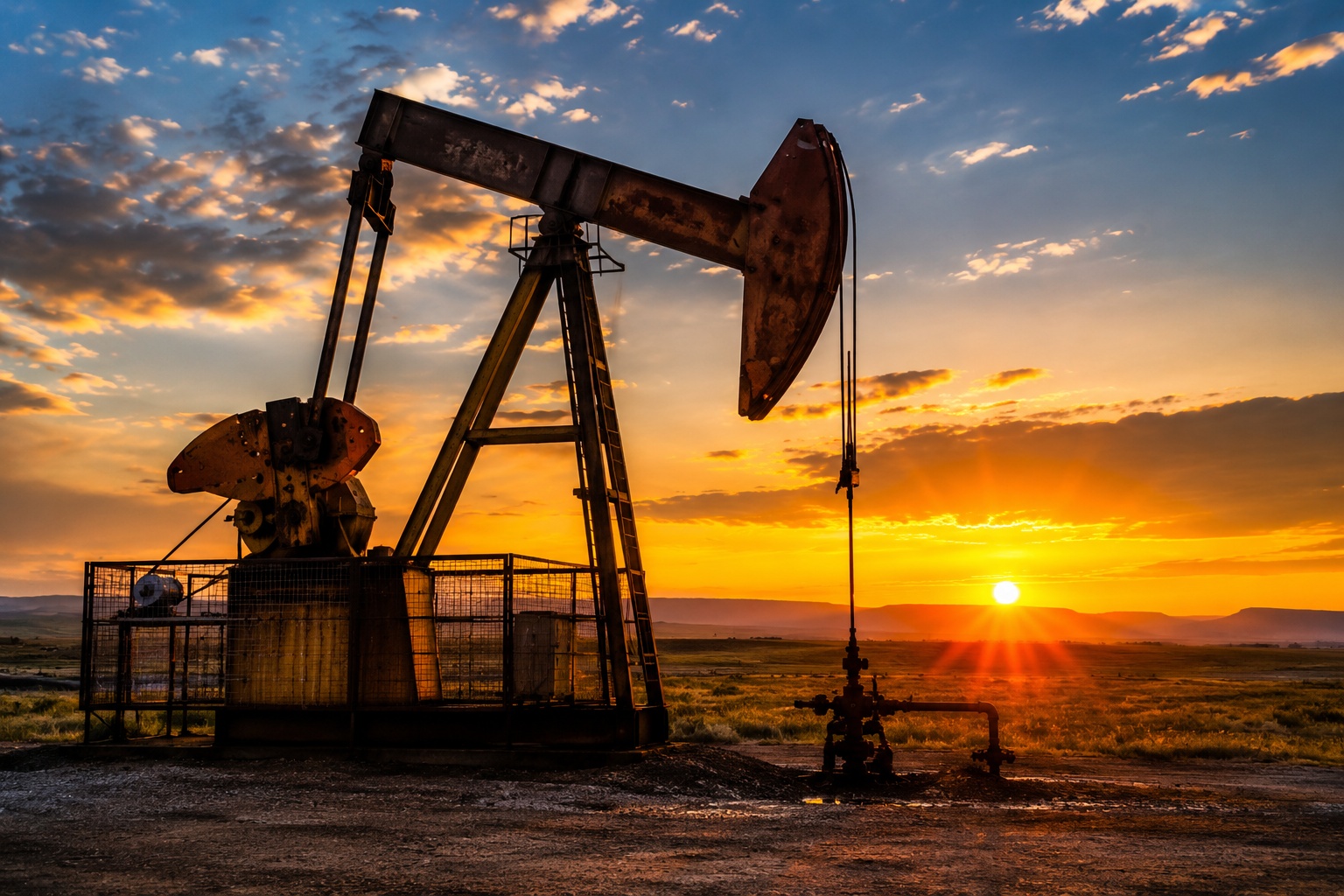
Image Generated by AI
The third reason to consider oil well investment now is the structural underinvestment in global upstream oil production that has accumulated since the 2014–2016 oil price collapse and accelerated during the COVID-19 period, creating a supply deficit that will support oil prices and production economics for years to come. Our analysis of how upstream production is tracking against future supply needs provides detailed context on this dynamic.
Global upstream oil investment peaked at approximately $750 billion annually in 2014, before the Saudi-led OPEC strategy of flooding markets to defend market share against U.S. shale triggered a collapse in drilling activity worldwide. By 2016, global upstream investment had fallen to approximately $400 billion, a reduction of nearly $350 billion annually. Although investment recovered partially during the 2017–2019 period, the COVID-19 pandemic triggered a second major investment collapse in 2020, with global upstream spending falling to approximately $350 billion, the lowest level in over 15 years.
The IEA estimates that sustaining global crude oil production at current levels, approximately 103 million barrels per day, requires approximately $500–$600 billion in annual upstream investment. The gap between actual investment levels and required investment levels over the 2015–2023 period represents a cumulative supply deficit that is manifesting as declining production from legacy fields, reduced spare capacity, and a diminishing inventory of permitted and permitted-but-not-yet-drilled well locations at major oil companies.
This underinvestment dynamic is structural, not cyclical. ESG pressure on institutional investors has raised the cost of capital for public oil companies, making large long-lead deepwater and oil sands projects increasingly difficult to finance. Regulatory uncertainty in key producing jurisdictions has deterred investment in high-potential but politically sensitive regions. The result is a global supply system that is progressively less capable of responding to demand growth or supply disruptions, a condition that supports higher sustained WTI prices and stronger well economics for U.S. shale operators who can access capital and permitted acreage more readily than international alternatives.
For oil well investors, structural supply underinvestment means that the WTI price floor is likely to remain elevated through the end of the decade, providing a durable foundation for well economics that reduces the downside price risk of direct production investment.
Reason 4: U.S. Energy Security and Domestic Production Policy
The fourth reason to invest in oil wells now is the strong and bipartisan U.S. policy commitment to domestic oil and gas production as a national energy security priority, a commitment that has been reinforced by the energy market disruptions of the post-Ukraine-invasion period and the growing recognition that U.S. shale production is a strategic geopolitical asset. For more on shale oil investment fundamentals, see our dedicated guide.
Russia's invasion of Ukraine in February 2022 and the subsequent European energy crisis, which saw TTF natural gas prices spike to the equivalent of $100+ per MMBtu and Brent crude surge to $130 per barrel, demonstrated the catastrophic economic and security consequences of energy import dependence. The crisis accelerated U.S. LNG export expansion, produced bipartisan legislative support for domestic energy production, and elevated the strategic value of U.S. Permian Basin, Eagle Ford, and Bakken production in the eyes of policymakers, allies, and energy security analysts.
The U.S. Inflation Reduction Act of 2022, while primarily focused on clean energy incentives, also included provisions supporting domestic oil and gas leasing on federal lands, reflecting Congressional recognition that energy security requires maintaining robust domestic production during the energy transition. The Biden administration's unprecedented release of 180 million barrels from the Strategic Petroleum Reserve (SPR) in 2022, and the subsequent need to refill the SPR at prices below $70 per barrel, created a government-sponsored price floor that implicitly supports domestic production investment.
The Trump administration's return to office in January 2025 brought an explicit "drill baby drill" energy policy orientation, including accelerated federal permitting, expanded Gulf of Mexico lease sales, support for LNG export terminal approvals including the previously paused Golden Pass LNG and Port Arthur LNG projects, and a general regulatory environment favorable to domestic oil and gas production investment. For oil well investors, a permitting-friendly regulatory environment reduces the timeline and cost risk associated with drilling program execution.
Reason 5: Technology-Driven Efficiency Gains in Well Performance
The fifth reason to invest in oil wells now is that technological advances in horizontal drilling, hydraulic fracturing design, and well completion optimization have fundamentally improved the economics of U.S. shale well investment over the past decade, and continue to do so.
The average Permian Basin horizontal well drilled in 2024 produces approximately 3–5 times more oil in its first year than a comparable well drilled in 2014, at roughly the same or lower total well cost. This dramatic improvement in well productivity reflects advances in lateral length extension (wells now routinely exceed 15,000 feet of horizontal reach), completion intensity (more frac stages per foot, higher proppant loadings), precision landing in optimal reservoir targets using advanced logging-while-drilling (LWD) tools, and improved understanding of reservoir geology through 3D seismic analysis and microseismic monitoring.
Drilling efficiency, measured as days per well, has improved by approximately 40–50% since 2014, meaning operators can drill more wells per rig per year at lower cost per well. Diamondback Energy (FANG) reported average drilling times below 15 days per well in the Midland Basin in 2023, compared to 30–40 days per well for equivalent depths a decade earlier. This efficiency improvement directly reduces the capital cost per barrel of recoverable reserves and improves the IRR of working interest investments.
Artificial intelligence and machine learning applications to subsurface geology, drilling optimization, and production forecasting are the next frontier of efficiency improvement, with operators including ConocoPhillips (COP), Devon Energy (DVN), and Ovintiv (OVV) deploying AI-driven analytics to optimize well placement, completion design, and artificial lift selection in ways that are expected to further improve ultimate recovery rates and reduce per-barrel costs through the late 2020s.
For oil well investors, these technology-driven efficiency gains mean that the same dollar of invested capital in 2024 purchases significantly better well economics, with more production per dollar, faster payback, and higher IRR, than at any previous point in U.S. shale history.
Reason 6: LNG Export Growth Supporting Domestic Oil and Gas Economics
The sixth reason to consider oil well investment now is the structural demand uplift provided by the rapid expansion of U.S. LNG export capacity, which is pulling both natural gas and associated crude oil production economics higher as export demand permanently raises the baseline revenue environment for Permian Basin and Gulf Coast producing assets. Our article on natural gas storage's influence on U.S. and global markets explains how these dynamics interact with broader energy market fundamentals.
The United States became the world's largest LNG exporter in 2023, with total export capacity reaching approximately 14 billion cubic feet per day (Bcf/d) by early 2025. Active and under-construction LNG terminals include Sabine Pass LNG (Cheniere Energy), Corpus Christi LNG (Cheniere Energy), Freeport LNG, Cove Point LNG (Dominion Energy), Calcasieu Pass LNG (Venture Global), Plaquemines LNG (Venture Global, under construction), Golden Pass LNG (QatarEnergy/ExxonMobil, under construction), and Port Arthur LNG (Sempra Infrastructure, under construction). When the current construction pipeline is complete, projected by 2028, total U.S. LNG export capacity will reach approximately 20–24 Bcf/d.
This LNG export demand growth creates direct benefits for oil well investors in two ways. First, associated natural gas production from Permian Basin crude oil wells, which is produced as a byproduct of oil extraction, is increasingly valuable as LNG export demand tightens the natural gas market and raises Henry Hub prices. In earlier years of Permian Basin development, associated gas was frequently flared (burned off) because there was insufficient pipeline capacity and market demand to monetize it economically. Today, associated gas is a meaningful revenue contributor to Permian Basin well economics. Second, LNG export growth supports broader Gulf Coast energy infrastructure investment and operational activity that creates positive spillover effects for nearby producing assets, including access to competitive crude oil takeaway capacity and export terminal infrastructure.
Reason 7: Oil Well Investment as Inflation and Portfolio Hedge
The seventh reason to invest in oil wells now is their function as a direct and powerful hedge against inflation and portfolio volatility, a function that has become increasingly valued as investors seek alternatives to traditional fixed-income and equity portfolio construction in an era of persistent inflation uncertainty. For a broader discussion of how natural gas and oil compare as investment hedges, see our guide on natural gas vs. oil prices: key differences and investment strategy.
Direct oil well investments generate revenue streams that are explicitly linked to WTI crude oil prices, a commodity that is itself a direct component of the Consumer Price Index (CPI) through gasoline, diesel, and heating fuel costs. When inflation rises, WTI prices typically rise simultaneously, and oil well production revenues expand proportionally. This inflation linkage is more direct and complete than that provided by oil stocks, which are also influenced by management decisions, capital allocation choices, debt levels, and broader equity market sentiment, or oil ETFs subject to contango drag and tracking error.
The monthly cash distribution structure of oil well working interest investments, wherein investors receive their proportional share of production revenues, net of operating costs, on a monthly or quarterly basis, provides a current income stream that adjusts automatically with oil prices. In a rising oil price environment, well distributions increase without requiring any action by the investor. In a high-inflation environment where fixed-rate bonds are losing real value, this floating-rate, commodity-linked income stream is particularly attractive.
Oil well investments also provide portfolio diversification benefits because their return drivers, including production volumes, WTI prices, and operating cost efficiency, are largely uncorrelated with equity market returns, interest rate movements, and credit market dynamics. During the 2022 period of simultaneous equity market selloffs and rising inflation, the worst environment for traditional 60/40 equity/bond portfolios in decades, oil well investments and energy sector equities were among the best-performing asset categories in any diversified portfolio.
What Returns Can Investors Expect from Oil Well Investments?
Returns vary significantly depending on well location, operator quality, commodity prices, and investment structure. Unlike fixed-income investments, oil well returns are directly linked to production performance and prevailing oil and natural gas prices.
In core Permian Basin acreage, successful horizontal wells can generate projected internal rates of return (IRRs) ranging from 30% to 60% under favorable oil price conditions. Payback periods often range between 18 and 36 months when WTI crude oil prices remain above breakeven levels.
Investors should understand that returns are not guaranteed. Actual results may differ materially from projections due to production decline rates, operational challenges, cost overruns, or commodity price volatility. Reviewing historical operator performance and independent reserve reports is essential before relying on projected returns.
Understanding Reserve Reports
Reserve reports are among the most important documents used to evaluate an oil well investment opportunity. These reports are typically prepared by independent petroleum engineering firms and estimate the amount of recoverable oil and gas contained within a producing property.
Reserves are generally categorized into three classifications:
Proved Reserves (P1) represent volumes that are reasonably certain to be recovered under existing economic and operating conditions.
Probable Reserves (P2) represent additional volumes that are less certain but still considered likely to be recovered.
Possible Reserves (P3) represent more speculative volumes with a lower probability of recovery.
Investors should prioritize opportunities supported by substantial proved reserves and independently verified engineering reports. Reserve reports help investors evaluate expected production, projected cash flows, asset value, and downside risk before committing capital.
Risks of Investing in Oil Wells
Oil well investment carries significant risks that must be carefully evaluated before capital commitment. Understanding these risks is essential to making informed oil well investment decisions. Our guide on what to look for in oil and gas investment company performance metrics provides a useful framework for evaluating operator quality.
Production Decline Risk is inherent to all oil well investments. Shale wells experience rapid initial production decline, typically 60–80% in the first year, meaning that actual production may fall below type curve projections if reservoir quality, completion effectiveness, or pressure maintenance are below expectations. Investors should review operator well performance data against published type curves to assess historical execution accuracy.
Commodity Price Risk directly affects well revenues. A sustained decline in WTI prices below operator breakeven costs, approximately $40–$55 per barrel in the Permian Basin, can reduce or eliminate well distributions and impair capital recovery. The history of WTI prices includes multiple periods of sustained sub-$50 pricing that would materially impair well economics at typical cost structures.
Operator Execution Risk is the risk that the drilling and completion operator fails to execute the well program within budget, on schedule, or to the geological targets specified in the investment prospectus. Investors should evaluate operator track records, financial strength, and regulatory compliance history before committing capital to any oil well program.
Illiquidity Risk is a critical consideration. Oil well working interest investments are illiquid; there is no active secondary market for working interests in individual wells, and investors should expect to hold their investment for the full producing life of the well, which may extend 20–30 years. Capital committed to oil well investments is not readily recoverable if circumstances change.
Environmental and Abandonment Liability represents a long-term obligation that working interest holders share proportionally with other interest owners. Regulatory requirements for well plugging and abandonment at end of productive life, which can cost $50,000–$500,000 per well depending on depth and complexity, must be factored into the long-term economic analysis of any oil well investment.
How to Evaluate an Oil Well Investment Opportunity
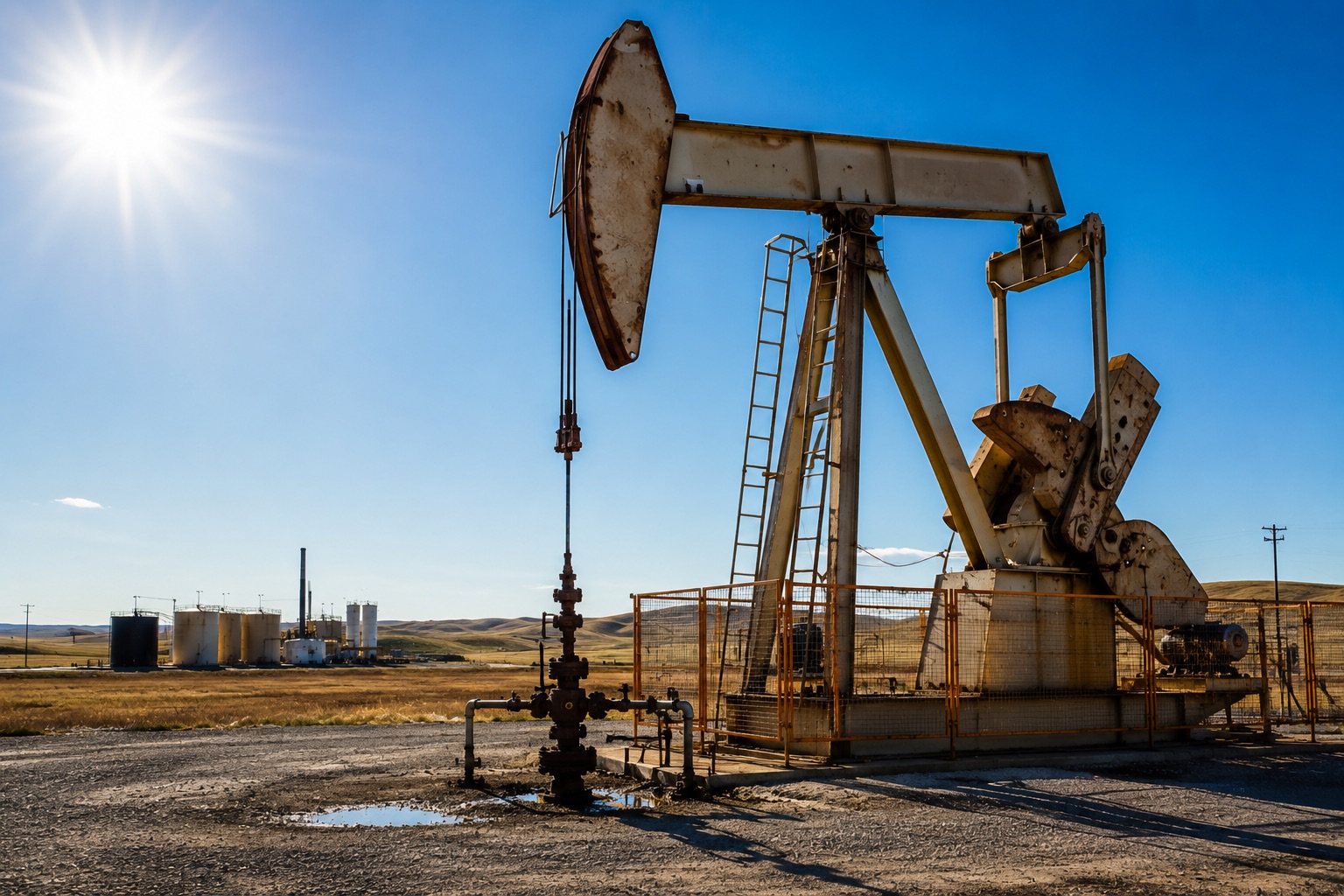
Image Generated by AI
Evaluating an oil well investment requires due diligence across five primary dimensions that collectively determine whether the investment merits capital commitment.
Operator Track Record is the most important evaluation criterion. The operator's historical well performance, including actual production versus type curve projections, actual costs versus budget, regulatory compliance record, and financial stability, provides the most reliable available predictor of future execution quality. Investors should request operator-level production data from state regulatory databases including the Texas Railroad Commission (for Permian Basin and Eagle Ford wells), the North Dakota Industrial Commission (for Bakken wells), and the New Mexico Oil Conservation Division before committing capital.
Well Location and Geology determines the quality of the underlying resource. Core Permian Basin acreage in the Midland Basin (Wolfcamp A, Wolfcamp B, Spraberry formations) and Delaware Basin (Wolfcamp A, Bone Spring formations) is the highest-quality, lowest-breakeven oil well investment geography in the United States. Acreage in less proven or more geologically complex areas carries higher geological risk and should be priced accordingly. Our beginner's guide to upstream crude oil fundamentals covers the geological concepts that underpin these location quality distinctions.
Investment Structure and Economics must be analyzed carefully, including working interest percentage, net revenue interest after royalties, carried interest provisions, promote structures (fees paid to the operator), and the timing and structure of cost recovery before investors begin receiving production distributions.
Price Assumptions and Sensitivity should be stress-tested across a range of WTI price scenarios, including $50, $60, $70, and $80 per barrel, to understand the investment's performance across the realistic range of future oil price outcomes. Wells that generate acceptable returns at $55–$60 WTI provide a meaningful margin of safety against price downside.
Legal and Regulatory Review of the joint operating agreement (JOA), limited partnership agreement, or direct participation program (DPP) prospectus by qualified oil and gas legal counsel is essential before capital commitment. Key provisions including operator indemnification, force majeure terms, assignment restrictions, and abandonment obligations should be reviewed and understood before signing.
Oil Well Investment Due Diligence Checklist
Before investing in any oil well program, investors should complete a thorough due diligence review.
Verify the operator's production history and track record.
Review historical well performance versus original projections.
Analyze reserve reports prepared by independent engineering firms.
Confirm drilling and completion cost estimates.
Evaluate breakeven oil price assumptions.
Review net revenue interest and royalty burdens.
Assess environmental and regulatory compliance history.
Review all partnership agreements and operating contracts.
Stress test projected returns at lower oil prices.
Consult qualified legal, tax, and financial advisors.
A disciplined due diligence process can help investors identify higher-quality opportunities and avoid unnecessary risks.
Conclusion
Oil well investment offers a unique way to participate directly in energy production while benefiting from potential cash flow, tax advantages, and exposure to long-term oil market fundamentals. Unlike oil stocks or ETFs, direct ownership provides investors with a share of production revenues and access to tax incentives that are largely unavailable through traditional investment vehicles.
Several factors continue to support the investment case for oil wells, including favorable economics in major producing regions such as the Permian Basin, ongoing global supply constraints, growing U.S. LNG export capacity, technology-driven efficiency improvements, and the potential for inflation-linked income. At the same time, investors must carefully evaluate risks related to commodity prices, production performance, operator execution, and investment illiquidity.
For accredited investors willing to conduct thorough due diligence, oil well investments can serve as a valuable alternative asset within a diversified portfolio. Understanding the economics, tax implications, and quality of the underlying operator is essential before making any investment decision. For ongoing market intelligence to inform those decisions, explore our Market Insights hub.
FAQs
What is oil well investment and how does it differ from buying oil stocks?
Oil well investment involves direct ownership in producing oil and gas assets, allowing investors to earn a share of production revenue. Oil stocks provide indirect exposure through publicly traded companies whose performance depends on many factors beyond commodity prices.
What tax benefits do oil well investments offer?
Working interest investors may qualify for intangible drilling cost (IDC) deductions, depreciation of tangible costs, and percentage depletion allowances, potentially improving after-tax returns.
What are the biggest risks of investing in oil wells?
Key risks include commodity price volatility, production declines, operator performance issues, illiquidity, and potential environmental or abandonment liabilities.
What WTI oil price is needed for oil well investments to be profitable?
Core Permian Basin wells typically break even around $40–$55 per barrel, while other regions may require higher prices depending on geology and operating costs.
Who can invest in oil wells and how do you get started?
Most direct oil well investments are available to accredited investors. Getting started involves evaluating operators, reviewing well economics, conducting due diligence, and consulting legal and tax advisors before investing.

Comments