


Key Takeaways
- The success of HDD projects depends on selecting the right equipment for ground conditions, pipe size, and project scale. Matching rig capacity and guidance systems to the job ensures accuracy, efficiency, and minimal disruption.
Introduction
Horizontal directional drilling (HDD) is a trenchless construction technique that enables the precise, efficient, and low-impact installation of underground utilities such as pipelines, electrical conduits, and fiber optics beneath roads, rivers, and developed environments.
Unlike open-cut excavation, HDD minimizes surface disruption and environmental damage, making it the preferred method in residential neighborhoods, dense urban zones, and protected ecological areas.
The success of any HDD project depends heavily on selecting the right equipment. From drill rig size and guiding systems to cutting heads and reamers, the equipment must align with the project’s diameter requirements, soil conditions, and accuracy demands.
Understanding the capabilities of small, medium, and large HDD rigs as well as the technologies behind walk-over, wireline, and gyro-based guidance is essential for contractors and engineers tasked with delivering fast, safe, and cost-effective utility installations.
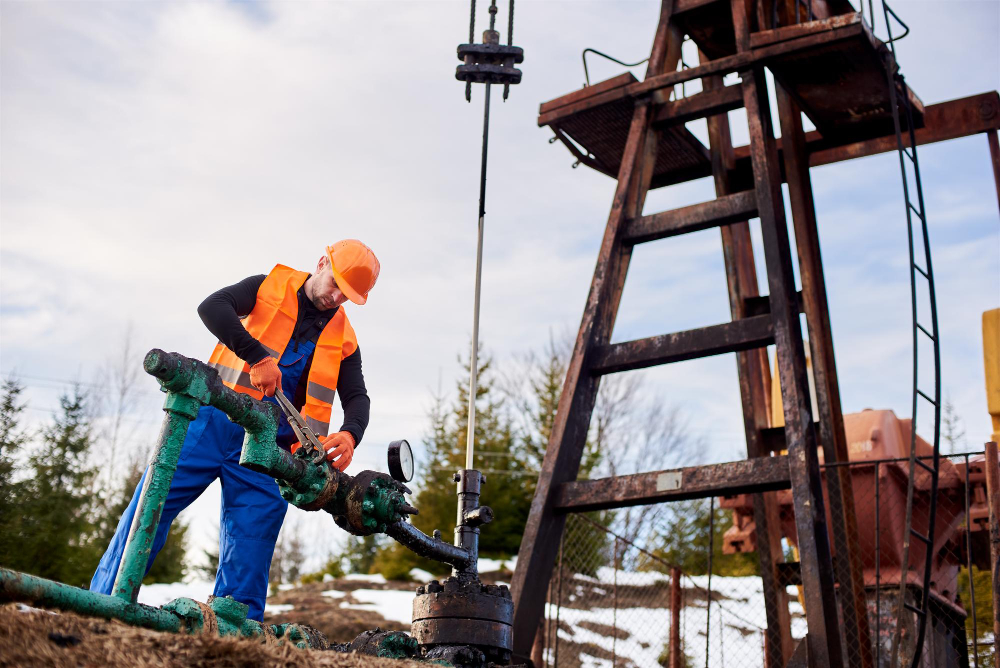
Image Credit: FreePik
Overview of Horizontal Directional Drilling Equipment
Horizontal directional drilling equipment enables operators to bore controlled underground paths and install utilities without disturbing the surface. These systems vary in size and complexity depending on the job and include:
Drill rigs: Supply the thrust, torque, and rotational power needed to create the bore path. They are the central control and power unit for the operation.
Drill bit: The cutting heads that break through soil, rock, or mixed ground conditions. Different bits are used for different geologies.
Guiding systems: Technologies that track the drill head’s location and orientation in real time to ensure it stays on the correct path.
Pullback and reaming tools: Reamers expand the pilot hole to match the pipe diameter; pullback systems draw the utility pipe into place.
Digital controls and telemetry: Advanced rigs often include GPS and telemetry to improve accuracy, automate key functions, and monitor performance.
HDD Equipment by Size and Capacity
The size and capacity of HDD equipment are directly linked to the diameter of the product being installed, the length of the bore, and the geological conditions. Projects typically begin with a pilot bore, which is then enlarged through reaming.
A. Small-Diameter Systems (6-12 inches)
Suitable for residential or light commercial applications, such as fiber optics, irrigation lines, or small gas services.
These systems are compact and easier to transport, making them ideal for tight urban areas or short bores.
Operators benefit from lower training requirements and faster setup.
B. Medium-Diameter Systems (12-24 inches)
Often used for municipal pipelines, including water, stormwater, gas, or sewage lines.
Require mid-range torque and power capacities, and are compatible with tougher soils.
Rig and tooling selection must account for both ground conditions and bore length.
C. Large-Diameter Systems (24-48 inches or more)
Designed for major installations like oil and gas pipelines, river crossings, or long-distance infrastructure.
These rigs demand higher horsepower, advanced steering systems (often gyro or wireline), and robust reaming tools.
Site logistics, drilling fluid management, and environmental permits are more complex.
D. Impact of Equipment Size:
While large rigs handle more demanding installations, they come with higher costs and stricter site requirements. Smaller systems offer flexibility but may need staged reaming or multiple passes for large-diameter pipe pulls.
Types of Guiding Systems for HDD
Accurate drill head tracking and control are essential to avoid utility strikes, misalignment, or costly re-drills. The choice of guiding system depends on the bore depth, complexity, and surrounding environment.
A. Walk-Over Locating Systems
A transmitter (sonde) behind the drill head emits signals tracked by a receiver at the surface.
Ideal for short or shallow bores in open areas.
Pros: Easy to operate, affordable, and mobile.
Cons: Signal can degrade near metal structures or in urban settings with high interference.
B. Wireline Location Systems
Involves a conductive wire or grid laid out along the planned bore path to receive signals.
Typically used in open environments or longer runs.
Pros: Offers accurate positioning over longer distances.
Cons: Setup is labor-intensive and less effective in congested areas.
C. Gyro-Based Steering Systems (Gyro-HDD)
Uses internal gyroscopes to continuously track orientation and movement underground.
Functions independently of external signals, making it ideal for high-accuracy or interference-prone environments.
Often paired with automated control software for real-time corrections during complex bores.
Drill Bits and Reaming Tools
Drill Bits:
Carbide-tipped bits are optimized for cutting through rock or compact soils.
Steel or composite bits work better in clay, sand, or mixed loose materials.
Choosing the right bit improves steering response, drilling speed, and tool life.
Reaming Tools:
After the pilot bore, reamers are used to enlarge the hole to accommodate the product pipe.
Available in different configurations (single- or multi-cone) based on soil type.
Must match the pipe size and allow sufficient clearance for fluid return and smooth pullback.
Key Considerations:
Ream too little, and the pipe may bind. Ream too much, and the hole may collapse or cause fluid loss.
Bit and reamer wear must be monitored closely to avoid delays or poor borehole quality.

Image Credit: FreePik
Control Systems and Automation
Automation and digital controls are becoming standard on modern HDD rigs to improve performance and reduce errors.
Computer-aided drilling (CAD): Allows real-time adjustments based on terrain or deviation from the planned path.
Telemetry systems: Transmit live data on drill torque, depth, fluid pressure, and rotation speed.
Hydraulic automation: Smooths out rig movements during drilling and pullback, improving hole quality.
Safety features: Alerts for pressure anomalies, potential cross-bore hazards, or tool deviation.
These systems not only enhance precision but also support better recordkeeping and project traceability.
Applications of HDD Equipment
A. Utility Installation
Water, sewer, and gas lines are beneath roads, railways, or landscaped areas.
Common in fiber optic or telecom installations in urban zones.
B. Industrial Pipelines
Used for oil, gas, and chemical lines requiring long, secure crossings.
Gyro steering and heavy-duty rigs are often required for environmental or high-pressure applications.
C. Environmental and Minimal-Impact Projects
HDD minimizes disruption in wetlands, parks, or protected areas.
Reduces the need for excavation, speeding up permitting and restoration.
Importance of Selecting Proper Equipment
The right equipment choice makes or breaks an HDD project. Benefits include:
Accuracy: Prevents unintentional damage to nearby utilities or structures.
Efficiency: Minimizes rework, tool wear, and delays.
Safety: Reduces risks to workers and nearby communities.
Cost Management: Keeps the project on budget by avoiding overruns or repeat drilling.
Selection criteria should include:
Pipe size and material
Soil composition
Required bore depth and length
Environmental and regulatory constraints
Preferred tracking method
Conclusion
Horizontal directional drilling equipment plays a pivotal role in delivering trenchless infrastructure projects safely, precisely, and efficiently. Selecting the right rig size, guiding system, and cutting tools ensures bore paths are executed on target, timelines are met, and surface disruption is minimized.
Whether you're installing residential fiber lines or executing a multi-pipe river crossing, success depends on matching equipment capabilities to project complexity. Familiarity with HDD equipment fundamentals helps project managers, engineers, and field teams execute confidently in any terrain.
FREQUENTLY ASKED QUESTIONS (FAQs)
What is horizontal directional drilling equipment used for?
It is used to install pipes and cables underground without surface excavation ideal for roads, rivers, and sensitive areas.
How do guiding systems affect HDD accuracy?
They ensure the drill head follows the designed path. Walk-over, wireline, and gyro systems suit different ground and interference conditions.
What sizes of HDD equipment are available?
Rigs are categorized into small (6–12"), medium (12–24"), and large (24–48+"), depending on pipe size and project demands.
What types of drill bits are used in HDD?
Carbide-tipped for rock; steel or composite bits for soil. Reamers are used to enlarge the bore for final pipe pullback.
Why is automation important in HDD projects?
It improves precision, detects drilling issues early, and helps crews work faster with better safety and accuracy.

Comments