


Key Takeaways
- Oil futures contracts are agreements where you get to buy or sell oil at predetermined prices in the future. Before getting into oil trading, it’s imperative that you know the difference between futures contracts and spot prices.
Futures contracts can be traded in the CME Group and ICE, among other places, whereas the spot price refers to the actual value of the oil available for immediate delivery.
Introduction
Oil futures are contracts that are negotiated in advance to purchase oil and sell oil in a specified amount and at a specified price on a date set in advance. The largest trading market for oil futures is the New York Mercantile Exchange (NYMEX), which is owned by the CME Group. NYMEX oil futures are identified by the ticker symbol CL. There is also oil futures trading at the Intercontinental Exchange (ICE), where Brent Tut is identified as BRN. These two oil futures are traded in such a manner that combined they have an average daily trading volume of over 1,000,000 futures contracts. Thus, oil futures represent a highly liquid and widely traded safe and sound investment marketplace throughout the world.
As such, the news or other media source's reference for oil prices will be primarily referring to a futures price rather than a spot price. Futures are an expectation of what will occur in the future, while a spot price is an indication of current reasonable conditions.
Understanding this difference is very crucial for every present or future investor who wants to be a part of the oil industry, invest in energy markets, or simply wants to know how oil prices work.
What Are Oil Futures?
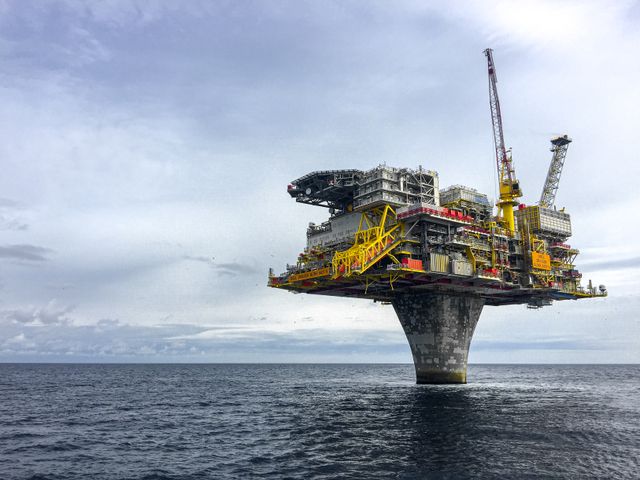
Image Source: Pexels
The oil future contract refers to a tradeable agreement obliging the buyer to buy and the seller to sell a pre-defined amount of oil for a particular price at a future date. Such agreements are mainly traded in NYMEX (which is owned by CME Group) and ICE, where WTI (West Texas Intermediate) and Brent Crude oil are regarded as benchmarks. A typical WTI oil futures contract consists of 1,000 barrels of oil priced in USD per barrel. Physical delivery occurs in Cushing, Oklahoma; however, most investors settle their deals before delivery time.
In general, oil futures can be accessed in several different expiries extending from very close dates to even years from now. However, the most liquid of all, and often quoted in the financial media, is the front-month contract, which is the nearest expiry date from the present. As the contract details significantly influence the risk and reward of the deal, it becomes imperative to understand how contracts work before investing.
Understanding contract specifications is important because details like contract size, pricing, and delivery terms directly influence how much risk a trader takes and how profits or losses are calculated.
West Texas Intermediate (WTI) Crude Oil Futures (CL)
A futures contract of this type involves 1,000 barrels of crude oil. The quotation in dollars per barrel is made. The minimum price change of $0.01 is equal to $10 for each contract. Therefore, it may influence your earnings.
In case if the price is set at $80 per barrel, then the total cost of your position will be $80,000. Nevertheless, you will have to make only a margin deposit, which varies between $4,000 and $7,000.
Micro WTI Futures (MCL)
If you have smaller capital, then Micro WTI futures contracts will be convenient for you. They represent just 100 barrels or one-tenth of the standard contract.
Brent Crude Futures (BRN)
As regards Brent, it should be noted that it is traded on ICE. Brent futures also contain 1,000 barrels, and they are cash settled. It is a global benchmark for international crude oil pricing.
What Is the Oil Spot Price?
The oil spot price is the current price of crude oil that is being sold or purchased on the spot market. This is different from the futures prices because while futures prices are indicative of the future, the spot price is reflective of the present situation.
If we look at WTI crude, then the spot price would be the actual price of the oil that is being delivered at Cushing, Oklahoma, while the spot price of Brent crude is reflective of deliveries made in the North Sea.
Supply and demand considerations drive spot prices, along with refinery operations, capacity in pipelines, weather interruptions, and inventories. The EIA reports that weekly inventories are one of the primary reasons behind fluctuations in oil spot prices.
Even though it plays an important part in the determination of benchmarks, most oil transactions are done through futures markets.
Oil Futures Prices Vs. Oil Spot Prices Difference
As already noted, oil futures and spot prices are correlated but still quite different and have their own particular reasons behind movements.
Definition and Timeline
Spot prices refer to the current price of crude oil that should be delivered on the same day of its purchase.
While futures prices mean the price for a certain amount of crude oil delivered according to the agreement made by both parties in the future.
If, for instance, the spot price for the WTI crude oil is $80 per barrel and futures for December are trading at $83 per barrel, it does not mean that the prices contradict each other because there are two aspects:
The current oil price is $80
The expected future oil price is $83
What Does Each Price Indicate?
Spot prices are affected by whatever is occurring at present in the physical oil market. Spot prices respond immediately to occurrences such as shortages in supply, refinery demands, weather, and variations in stocks.
Futures prices, in contrast, are based on expectations regarding the future. Futures prices consider the following factors:
Cost of storage
Cost of financing
Predictions of supply and demand shifts
Seasonal factors
Geopolitical factors
In other words, the spot price indicates what is taking place, while the futures price indicates what will happen.
Oil Futures vs. Spot Price Comparison
Feature | Oil Spot Price | Oil Futures Price |
Delivery | Immediate delivery | Delivery on a future date |
Market Focus | Current market conditions | Future market expectations |
Main Drivers | Physical supply and demand | Supply forecasts, storage costs, interest rates, and market sentiment |
Expiration | No expiration | Fixed contract expiration date |
Trading Venue | Physical oil market | Futures exchanges such as CME and ICE |
While both prices are closely related, they serve different purposes. The spot price reflects the current value of crude oil in the physical market, whereas futures prices reflect what traders expect oil to be worth at a future point in time. Understanding this distinction is essential when analyzing oil market trends or investing in oil-related assets.
The Forward Curve: Contango and Backwardation
Analysing the prices of oil futures at various future dates forms the forward curve. The forward curve illustrates the anticipated changes in oil prices and whether there is ample or scarce supply.
Feature | Contango | Backwardation |
Relationship to Spot Price | Futures higher than spot price | Futures lower than spot price |
Market Condition | Oversupply or adequate supply | Tight supply or strong demand |
Storage Incentive | Encourages storage | Discourages storage |
Impact on Oil ETFs | Negative roll yield | Positive roll yield |
Market Signal | Generally bearish | Generally bullish |
What Is Contango?
Contango is a situation where futures prices of oil for future dates are higher than spot prices or short-dated futures prices.
This scenario arises where:
There is an excess supply of oil
The cost of storage is relatively high
For instance, if oil is selling at $80 currently but will be sold at $85 in three months, the forward market is experiencing contango.
In such instances, traders tend to purchase oil in the present, store it, and sell it later at a higher price.
What is Backwardation?
Backwardation is the opposite of contango, where the present price is higher than the future price.
This typically arises from:
A high current demand level
A low level of current supply
For instance, if the price of oil is $85 today and will be $80 in three months, the market is in backwardation.
Significance of Contango and Backwardation
These arrangements serve as markers:
A move from contango to backwardation signals a tight supply scenario, which may lead to higher prices
When there is a change from backwardation to contango, it means that the supply is improving, and it may result in lower prices
That explains why traders pay close attention to the forward curve rather than the prevailing price.
Approaching Convergence with the Spot Price
The approach to maturity implies that the futures price converges with the spot price. The reason behind this phenomenon is that the future starts resembling a physical transaction at this point.
It is possible to take advantage of the discrepancy, but it would attract arbitrageurs who would close the gap.
Effect of Contango on Oil ETFs
The differential between the futures and spot prices becomes apparent when investors engage in commodity investments through exchange-traded funds (ETFs).
For example, USO utilizes oil futures contracts. However, when the ETF sells the cheaper contracts and buys the more expensive ones, contango drag occurs in contango markets.
Why Oil Futures Markets are Needed
There are two main purposes of oil futures markets that make them necessary: price discovery and risk management through hedging.
Price Discovery
The price discovery process is a mechanism that helps futures markets find out the “fair” price of oil on the basis of time horizon.
This mechanism is possible due to the fact that many participants buy and sell oil futures depending on their expectations. All market participants have different views on supply, demand, geopolitical issues, weather conditions, economic development, etc.
Therefore, prices on benchmark contracts such as WTI and Brent reflect the market’s best guess about the fair price for oil in a given period in the future.
Importantly, this mechanism does not only benefit futures markets and traders. In fact, it performs a crucial role in the global economy:
It allows oil producers to plan their production and profits
Governments can budget effectively using the estimates of futures prices
Firms can decide on making investments based on oil futures prices
Hedging and Risk Management
Hedging utilizes futures contracts to minimize risks arising due to variations in the physical price level of oil. Since the oil price is extremely volatile, any fluctuations may have an effect on costs and earnings for the firm.
Through the use of futures, firms may be able to establish prices in advance. The oil producer can sell futures at a set price, while a consumer, for example, the airline or refinery, could buy futures in order to lock in his cost levels.
Though gains and losses arising from the futures trade will act as a balance to price changes in the physical market, the end result will be price stabilization rather than profiting from the volatility of the price.
The Importance of Hedging
Hedging is not intended for profit maximization but rather for minimizing risks.
Oil producers, refining companies, airlines, and shipping companies, among others, need hedging to help them:
Hedge their income
Cut down costs
Have confidence in planning
Indeed, this risk shift is the fundamental economic reason why futures markets exist. Speculators assume the risk, while firms hedge against it using futures contracts.
Who Trades in the Oil Futures Market?
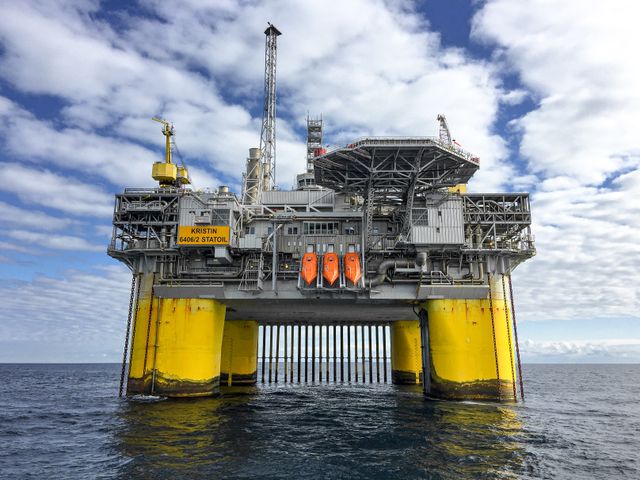
Image Source: Pexels
The oil futures market consists of different categories of participants.
Commercial Hedgers
These are oil producers, refiners, and consumers like airlines. They use futures trading to reduce their exposure to price fluctuation risks in their primary business activities.
Speculators
These are traders who invest to earn profits through market fluctuations. They inject liquidity into the market and facilitate hedging activities.
Retail Traders
These investors trade through online brokers and usually start with smaller-sized trades. Their market participation is lower compared to that of the other two categories, but it is increasing gradually.
How to Trade Oil Futures
Trading in oil futures needs some preparation, commitment, and understanding of risk.
Creating a Trading Account
You need an account that allows the trading of oil futures. This kind of account requires more permissions than a normal trading account.
Understanding the Role of Margin
In trading oil futures, traders use margin as a deposit to trade in oil futures. While using margins means bigger profits, it also means risks.
Choosing Contract Types
Oil traders tend to trade on the front month contract because it is very liquid. But traders may trade on long-dated contracts too.
Conducting Market Analysis
Successful trading needs to know certain key data points such as EIA reports, OPEC decision-making, and world economic indicators. Technical analysis can also help traders decide when to buy and sell oil futures.
Managing Risks
Managing risks is crucial while trading oil futures. It entails setting stop-losses and having a limited position size.
Closing/ Rolling Oil Futures Position
Most traders either close their position before the expiry date or roll it into another contract month.
Risks of Trading Oil Futures
While oil futures can offer significant profit opportunities, they also involve substantial risks that traders should understand before entering the market.
Leverage Risk
Oil futures use margin, allowing traders to control a large position with a relatively small amount of capital. While leverage can amplify profits, it can also magnify losses. A small move in oil prices can result in significant gains or losses.
Margin Call Risk
If a position moves against a trader and account equity falls below the required maintenance margin, the broker may issue a margin call requiring additional funds. Failure to meet the margin requirement can result in the forced liquidation of positions.
Market Volatility
Oil prices are highly sensitive to geopolitical events, OPEC decisions, inventory reports, economic data, and unexpected supply disruptions. These factors can cause rapid price swings within a short period.
Overnight Gap Risk
Oil futures trade nearly 24 hours a day, but major news events can cause prices to gap sharply higher or lower. In some cases, losses may exceed the level anticipated by a trader's stop-loss order.
Contract Expiration Risk
Futures contracts have expiration dates. Traders who do not intend to take physical delivery of crude oil must close or roll their positions before expiration. Failing to do so can create unintended obligations and additional costs.
For these reasons, effective risk management, position sizing, and the use of stop-loss orders are essential when trading oil futures.
Conclusion
Oil futures are crucial to the functioning of the global energy markets. They provide a mechanism for price discovery, risk management and trading opportunities for investors.
For you as an investor they provide key benefits including liquidity, and direct exposure to oil prices. But they also need a good knowledge of leverage, market structure and risk management.
If you are new to this space, starting with smaller contracts or alternative investment vehicles can help you gain confidence before taking on larger positions.
FAQs
What are Oil Futures? How Do Oil Futures Work?
Oil futures are standardized contracts traded on exchanges that permit participants to buy or sell crude oil at a fixed price at a future date. Each contract is for a set amount of oil . Traders use the contract to speculate or hedge against risk .
How do oil futures differ from spot price?
The spot price is today's price for oil to be delivered immediately, while futures prices are price expectations for delivery sometime in the future. Futures also have other costs such as storage and financing and the prices converge as the contract nears expiration.
Can beginners trade on oil futures?
Oil futures trading is open to beginners, but they must understand the risks involved. Consider starting with smaller contracts like Micro WTI or using ETFs for exposure with limited potential losses.
What is contango in oil market?
Contango is when the price of oil in the future is higher than today. It is often a sign of either a large supply or high storage costs and can impact returns on investment especially for funds that roll futures contracts.
How to Start Trading in Oil Futures?
To trade oil futures, you need a brokerage account that allows futures trading, understand your margin requirements, and have a strategy based on market analysis. It is also important to use risk management tools such as stop-loss orders.

Comments