


Key Takeaways
- This article, co-authored by Derrick May, President and CEO of Optimum Energy Partners, and Sameer Somal, CEO of Blue Ocean Global Technology, explores how Lincoln’s principles of steadfast honesty, careful discernment, and moral courage can help investors protect their capital and align with companies and leaders who share their values. Through Lincoln’s own stories and experiences– from courtroom battles to hard-earned political victories– we distill actionable lessons for today’s investors: trust, but verify; test those you work with; and above all, align with those whose ethics are beyond reproach.
Over a century and a half later, Lincoln’s moral grounding still echoes in boardrooms and investment halls. His style of leadership, which combines integrity and restraint, provides a vision to manage risk, build trust, and lead through volatility, values still prove critical in the oil and gas sector.
Introduction
Lincoln’s comments on legal ethics in his Notes for a Law Lecture (c. 1850) assert the importance of honesty: “Resolve to be honest at all events; and if in your own judgment you cannot be an honest lawyer, resolve to be honest without being a lawyer.”1 This fundamental concept of valuing honesty over ambition, a tenet that guided the rest of Lincoln’s career, offers practical advice for modern investors.
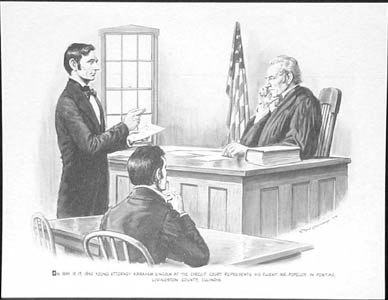
The Judge at the Circuit Court, backed by an American flag, is listening intently to Lincoln.
It might seem odd that Lincoln’s words would hit home within a sector he was not directly involved in, but that is how his legacy persists. Lincoln realized early on that success built on shaky ethics or blind trust rarely endures. His shrewd judgment mingled with an uncompromising honesty, assessing people by their actions rather than verbal promises. He believed in building partnerships rooted in character, a lesson that can be applied to the industry in question. In the volatile world of oil and gas, where fortunes can be made or lost on the integrity of a deal, Lincoln’s wisdom serves as an anchor and timeless guide.
Ultimately, Lincoln's example is telling about something more than financial strategy; it is about a deeper understanding that credibility is the premier form of capital. His ascent from humble origins to the presidency was built on trust due to his unwavering commitment to character rather than inherited wealth or influence. For investors, the same rings true, as integrity and credibility rank among the most valuable of currencies.
I. Lincoln’s Enduring Lessons for Modern Investors
Abraham Lincoln’s life and career offer enduring lessons that extend well beyond antebellum courtrooms and the White House Cabinet and into the modern world of investing. His warning prospective lawyers in his Notes for a Law Lecture not only advocated for honesty but also advised them, “Discourage litigation. Persuade your neighbors to compromise whenever you can.”2 In fact, Lincoln’s devotion to integrity proved more fundamental than his devotion to law. He worked hard, valued diligence, and often preferred deliberation, negotiation, and compromise over confrontation. Lincoln believed in the power of reason over emotion, a perspective investors today should remember in markets often ruled by greed, anxiety and fear.
Lincoln’s commitment to honesty was not simply confined to his words; they are reflected in his actions. He handled business partnerships with sincerity and fairness, never demanding full fees in advance. His nickname “Honest Abe” was not a political fabrication but a genuine reflection of his reputation as a lawyer of meticulous fairness—an image that carried into his political life, where he was widely respected as a just and principled leader. His honesty paired with humility and wit, made him a relatable figure for a broad range of colleagues and constituents.
Even in rare cases when Lincoln stretched the truth, he did so out of a sense of empathy and justice. In one memorable trial, Lincoln’s quick humor not only lightened the courtroom but also reinforced his moral credibility. In a notable case in Woodford County, Abraham Lincoln represented Melissa Goings, a woman indicted for the murder of her abusive husband, a man known for his violent temper.3 The circumstances strongly suggested self-defense, and public sentiment largely sided with her. Lincoln believed her side of the story. During a court session, when Mrs. Goings was suddenly discovered missing, Lincoln faced questions concerning her whereabouts. He replied that she had asked him where she could get a drink of water, and he had told her he’d always heard the waters of Tennessee were excellent. The implication was clear—she had fled, and Lincoln had subtly aided her escape, and instead of lying about the incident, he framed his empathetic act with humor. Rather than harm his credibility, the quip disarmed the court and won laughter, showcasing how Lincoln’s humor and humility could defuse tension while reinforcing his deep sense of justice.4

Lincoln-Goings Statue: Lincoln and Melissa Memorialized at Metamora, Illinois
In today’s markets, an executive might be tempted not to disclose unflattering quarterly data, or shield potential clients from land lease information that might increase risk. Lincoln’s example, however, reminds modern business leaders and investors that credibility begins with transparency and compounds like interest. For modern investors, Lincoln’s example underscores that success relies on more than just technical skill or market timing. Success depends on character: honesty and fairness in dealings, patience in decisions, and the wisdom to balance reason with empathy. Investors must build trust with partners and clients like Lincoln did with juries and the public.
II. The Power of Character: Trust, but Verify
In the early 1830s, after returning from service in the Black Hawk War, Lincoln entered into business as a storekeeper with a fellow militiaman named William Berry.5 With no job, little education and few prospects, he thought running a small general store would offer a fresh start. At first, it seemed like a promising venture, but the two men quickly ran into trouble. They bought more inventory than they could afford and extended credit to too many customers who never paid them back. Berry’s drinking problem only made matters worse, leaving Lincoln to manage most of the work. Within a short time the store failed, and Lincoln was left with a large debt—about $1,100, or roughly $40,000 in today’s dollars—which he spent years repaying. This tough lesson taught him the importance of not only choosing reliable partners but also managing resources prudently.6
For today’s investors, Lincoln’s failed store is more than just a story of early hardship—it is a reminder of timeless fundamentals: know your partners, manage risk, avoid overextending and treat debt with seriousness. Just as Lincoln turned his setback into a foundation for future wisdom, modern investors can turn early mistakes into lasting strategies for sustainable success. Particularly in volatile sectors like oil and gas, this is a reminder that financial prudence, counterparty review, and strong liquidity management are not optional—they are necessary for survival.
Perhaps the most enduring lesson emerges from Lincoln’s response. Though not legally obligated to pay back the store’s debt, Lincoln assumed full responsibility out of a sense of honor, earning a reputation for integrity that followed him throughout his career. For investors, this highlights the long-term value of credibility and resilience. In markets like oil and gas, where trust is an inestimable currency, the ability to honor commitments, recover from setbacks, and learn from failure can be as valuable as any asset on the balance sheet.
III. Radical Honesty: The Foundation of Sound Partnerships
“Stand with anybody that stands right—stand with him while he is right and part with him when he goes wrong.” — Abraham Lincoln, Peoira, Illinois, October 16, 1854⁷
These lines demonstrate that Lincoln maintained these aspects of his personal and political life: truth over convenience, and character over obedience. His idea of morality was not dogmatic moralism but practical insight. This is the same attribute that distinguishes the transactional operator from the principled leader in business.
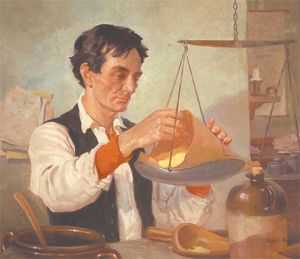
"Lincoln, the Honest Clerk" by Frederic Mizen captures Abraham Lincoln during his early years as a shopkeeper in New Salem, Illinois
Lincoln’s leadership legacy was built on more than strategy and speeches—it was built on personal connection. He spent nearly 75 percent of his day meeting with people, practicing an “open-door policy” that made the president of the United States remarkably accessible. Lincoln understood instinctively that information, trust and influence develop from listening to people—including those outside his immediate circle of advisors—a strategy modern business thinkers have called “Managing by Wandering Around.”
Instead of issuing orders, he made requests. Instead of punishing failure, he encouraged experimentation. And instead of destroying opponents, he worked to turn them into allies. In a legendary personal encounter, when an old woman scolded Lincoln for his conciliatory approach toward the South after the Civil War, he replied, “Madam, do I not destroy my enemies when I make them my friends?”8
This philosophy created a climate in which subordinates felt empowered to innovate and take risks, knowing that their leader valued honesty, dignity and collaboration above ego. He won loyalty by fostering genuine connections and showing integrity in every decision rather than relying on force.
For investors, this principle translates into demanding and practicing total transparency in every business partnership. Transparency is not a “soft skill” but a competitive edge. Just as Lincoln practiced uncompromising honesty in court, laying out every fact even when it carried risk, investors must demand the same standard in business. In oil and energy projects, where fortunes depend on a single report or contract clause, clarity is strategy. Rigorous due diligence, full disclosure and trust- based partnerships protect capital and build resilience.
The way Lincoln communicated was founded on establishing common ground, which remains essential in managing complicated energy projects. Research on leadership transparency and trust published by Harvard Business Review confirms that transparency and trust are the foundations of good leadership, virtues which align with those of the centuries-old practices of Lincoln, who proved that integrity is not a weakness in leadership but the foundation of lasting success.9 For modern investors, the same holds true: fail to honor people, and they will fail to honor you. When trust is earned, however, the results speak for themselves.
IV. Due Diligence: Lincoln’s Methodical Mind at Work
One of Abraham Lincoln’s most famous courtroom victories was the 1958 “Almanac Trial,” in which he defended Duff Armstrong against a murder charge.10 The trial stemmed from a chaotic picnic fight in which Armstrong was alleged to have struck the victim, and an eyewitness swore to have seen it clearly by the moonlight despite the late hour.
Lincoln responded with precision. Producing a copy of the 1857 almanac and turning to the relevant page in court, he revealed that the moon had already set by the time of the incident. With this single, meticulously researched fact, he dismantled the testimony of the eye witness—and thereby the prosecution’s case—and secured his client’s acquittal. His cross-examination wasn’t just about memory—it was about demonstrable fact.
This moment underscores one of Lincoln’s central intellectual habits: disciplined verification. Lincoln’s triumph in the Almanac Trial was about methodical preparation, creative questioning and an unwavering commitment to the truth, not simply luck. In the investment world, these same qualities protect capital. Success rarely comes from bold claims; it comes from disciplined fact-finding and the ability to uncover details that others overlook. Just as Lincoln refused to accept the witness’s story at face value, investors must dig deep to stress-test assumptions and verify every fact before putting money on the line.
Investors should trust evidence rather than assumptions to strengthen their defenses against risk. This means reviewing financial audits, including balance sheets, cash flow statements and independent audit reports. Especially in resource-heavy sectors, it translates to conducting land rights verification to confirm ownership, leases, or mineral rights tied to the investment. Prudent investors should examine compliance records, environmental clearances and any history of legal disputes. They should investigate the track record, integrity and prior business dealings of executives and board members. Lincoln learned the value of checking facts, including those related to business partners and courtroom clients. Just as Lincoln consulted an almanac to establish the facts of his case, oil and gas investors must be willing to consult independent engineers and geologists to validate assets, not simply accept a marketing narrative at face value.
V. Choosing the Right Associates: Lincoln’s Circle of Trust
When Abraham Lincoln took office in 1861, the United States teetered on the brink of civil war. Instead of surrounding himself with allies who agreed with him unconditionally, Lincoln executed a bold plan by inviting his most vocal political rivals into his inner circle. He appointed William H. Seward as Secretary of State, Salmon P. Chase as Treasury Secretary and Edward Bates as Attorney General, men who had fiercely competed against him during the Republican nomination process.11
He saw opportunity where others saw division. His strategy, famously dubbed as “Team of Rivals” and immortalized by historian Doris Kearns Goodwin, was motivated by a single guiding principle: “We needed the strongest men of the party in the cabinet.”12 By doing so, he ensured powerful states and factions were represented and committed to the Union’s cause.
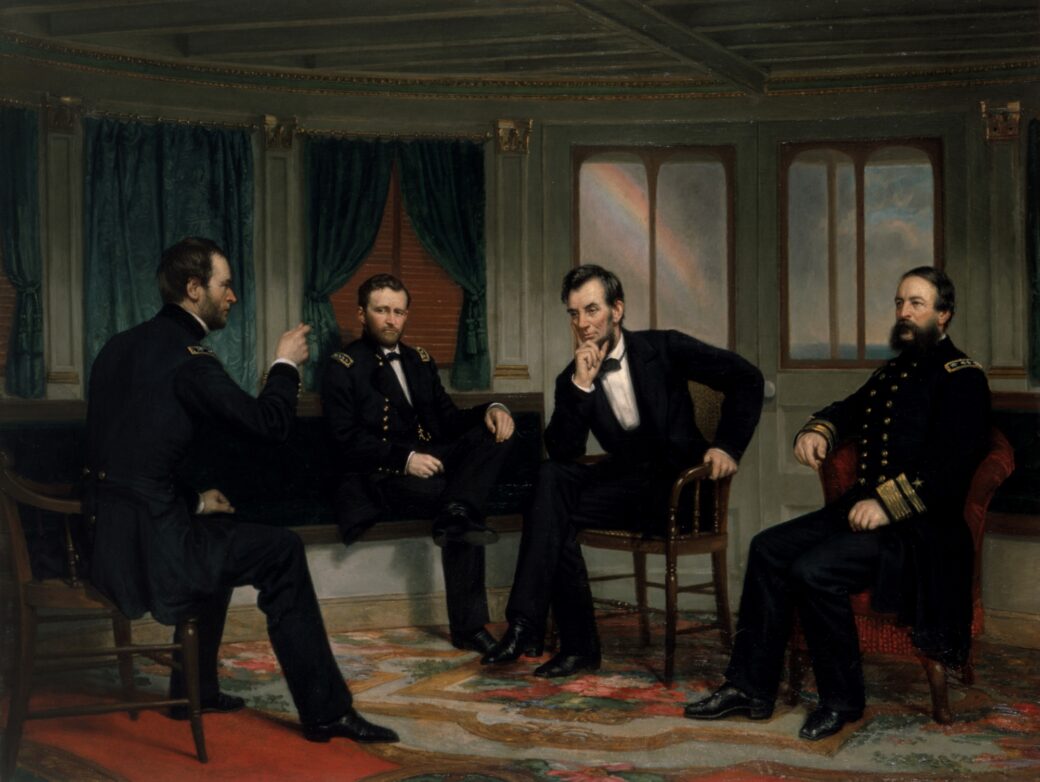
This courageous choice cultivated mutual respect and eventually transformed opposition into cooperation. Seward, once Lincoln’s opponent, became a trusted confidant who helped draft landmark policies. Together, these once-divided men formed a cabinet that led the nation through its darkest hour, a testament to the power of integrity and competency over loyalty alone.
Just as Lincoln did, principled investing requires discerning the character and competence of your partners and not just their alignment with your views. Lincoln was not seeking allies; he was seeking collaborators. Surrounding yourself with those who echo your own voice may blind you to a perspective that strengthens your decisions and deepens your impact. In oil and gas, where deals are complex and stakes are monumental, surround yourself with challengers who bring integrity and perspective.
VI. Resilience and Long-Term Vision
As a leader, Lincoln experienced hardship in his life through the defeat in elections, losing a loved one, and leading a nation at war. But perseverance was his characteristic feature. As he wrote to a young man seeking advice, “Always bear in mind that your own resolution to succeed is more important than any other one thing.”13
Even Abraham Lincoln, considered among the most successful U.S. presidents, endured repeated setbacks before rising to prominence. His journey was far from smooth, fraught with business failures, personal losses and political setbacks. However, he was defined not by these challenges but by how he responded to them. These setbacks help humanize Lincoln, revealing the trials that forged his resilience and strategic clarity. In the face of civil war, personal loss and national fragmentation, Abraham Lincoln’s leadership was most remarkable for his unwavering integrity and empathy, qualities that modern leaders cannot afford to lose. For oil and gas investors, Lincoln’s persistence offers timeless lessons in how early failures can fuel long-term success.
Whether it be stalled approvals or unexpected environmental compliance hurdles, for oil and gas investors obstacles should be treated as catalysts for refinement rather than reasons to retreat. The process of enduring repeated setbacks refines instincts, and the patience it requires helps build the acuity needed to navigate volatile markets or regulatory turbulence. Investors should avoid the trap of short-term thinking and instead focus on sustainable projects with durable models and strong cash flows. Just as Lincoln aligned himself with a larger purpose, investors should look to align with companies led by resilient operators. Markets will always move in cycles, but those who take the long view and commit capital to businesses structured to withstand both booms and contractions are more likely to achieve compounding value over time. By keeping patience at the core of decision-making, investors can build portfolios that thrive across decades, not just quarters.
VII. Conclusion: Reinventing Lincoln—and Reinventing Our Investments
Abraham Lincoln has been cast in countless avatars through the ages, from “Honest Abe” to a calculating wartime strategist, each reshaped to reflect the ideals and struggles of the era.
But Lincoln’s story is more than history. It is a blueprint for principled decision-making in the face of uncertainty, even for the oil and gas sector in 2025.
From his early business failures to his courtroom success at the Almanac Trial, from assembling a cabinet of rivals to guiding a nation on the brink of war, Lincoln proved the importance of consistent integrity, careful preparation and strategic resilience. For modern investors, these qualities still resonate through practices like prudently selecting partners, carefully checking assumptions and considering setbacks as opportunities for improvement. Character, patience and credibility are not optional traits; rather, they are as essential to long-term success as any financial indicator.
Ultimately, Lincoln’s legacy is this: Success is rarely the result of short cuts or luck. It arises from integrity, diligence and courage. Markets shift and evolve, geopolitics reframe, and technology disrupts expectations. To remain relevant and resilient, an investor’s ethos must evolve, too. Once can embrace new insights, from ESG frameworks to automation and geopolitical risk, without losing sight of foundational principles like integrity and empathy. In business, one must lead with purpose, balancing moral clarity with political pragmatism. Investors who commit to these Lincoln’s time-honored values will not only weather economic volatility but also create partnerships and portfolios that compound value over decades, creating a stronger and more resilient future for themselves and the energy industries they support.

Comments