

Key Takeaways
- The latest rise in U.S. gasoline prices reflects how regional refinery disruptions and global crude oil supply risks can quickly affect consumer fuel markets. For energy investors, the situation reinforces the importance of refining infrastructure, transportation logistics, and global oil market exposure in shaping both short-term fuel prices and broader energy sector performance.
U.S. gasoline prices are rising sharply ahead of Memorial Day weekend as refinery outages, crude oil supply disruptions, and tighter fuel inventories continue pressuring energy markets. Strong summer travel demand and higher oil prices have pushed fuel costs to some of their highest Memorial Day levels in recent years.
According to the U.S. Energy Information Administration, the national average retail gasoline price reached $4.49 per gallon on May 18, marking a 42% increase compared with the same period in 2025. Analysts say ongoing supply concerns and refinery disruptions could keep gas prices elevated through the summer driving season.
Crude Oil Prices Continue to Drive Fuel Costs
Crude oil remains the largest component of retail gasoline pricing, typically accounting for roughly half of what consumers pay at the pump. As benchmark oil prices increased during the spring, gasoline prices followed.
The recent rise in crude oil prices has been linked to supply concerns affecting international energy markets. Market participants have been closely monitoring disruptions tied to the Strait of Hormuz, one of the world’s most important oil transit routes. Reduced oil and fuel movement through the region has tightened global supply expectations and contributed to higher energy prices worldwide.
Although U.S. oil production remains historically strong, domestic fuel prices are still heavily influenced by international crude markets because U.S. producers and refiners actively participate in global trade.
Regional Fuel Market Conditions Created Large Price Differences
Gasoline prices varied significantly across U.S. regions due to local refining capacity, fuel regulations, taxes, and supply conditions.
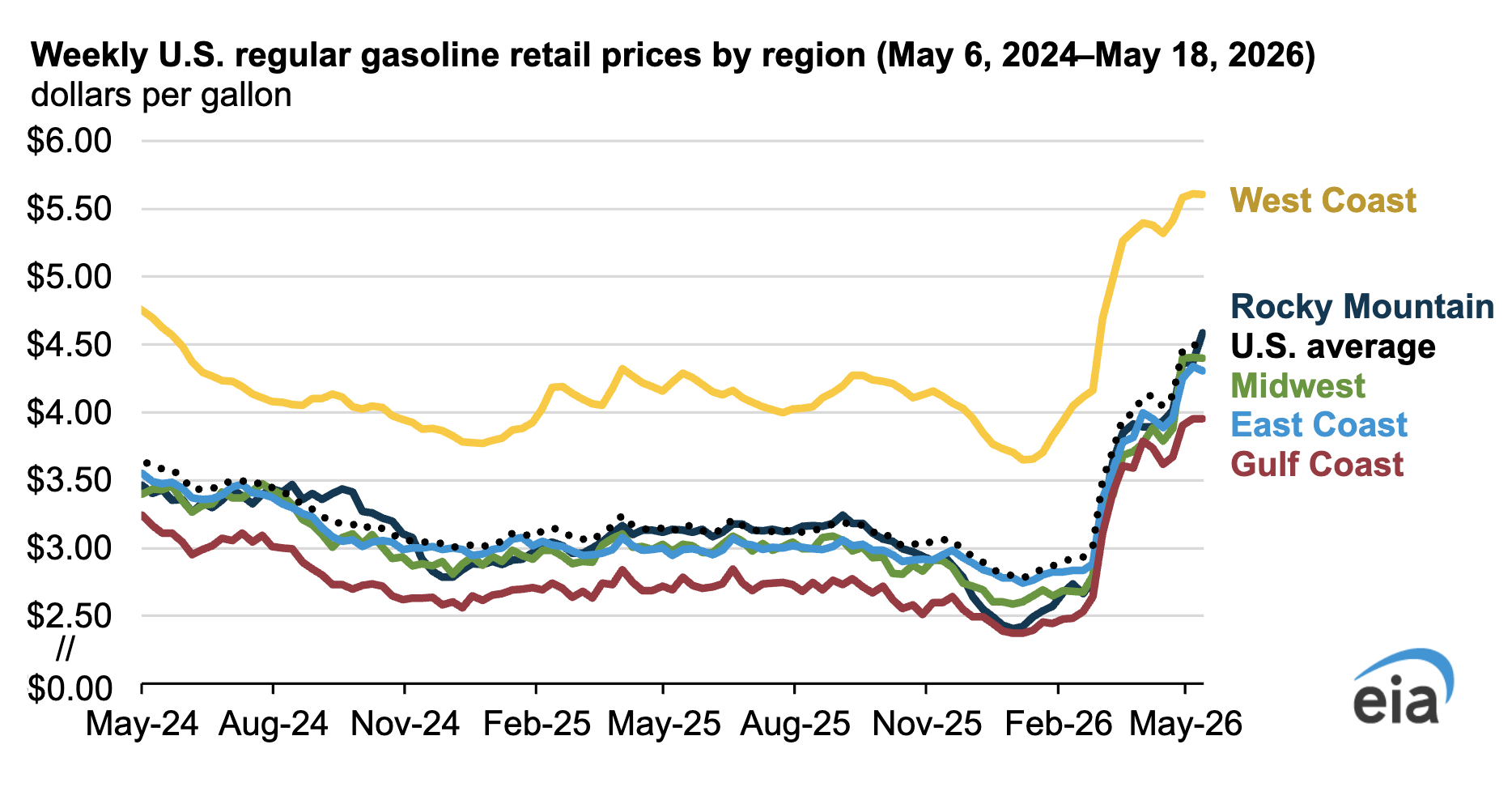
Image Source: EIA
The West Coast continued to report the highest gasoline prices in the country. Several structural factors contribute to elevated prices in that region, including limited pipeline connections to other refining hubs, stricter fuel specifications in California, and higher state fuel taxes.
At the same time, reduced refinery capacity along the West Coast has increased reliance on imported gasoline supplies in recent years.
Meanwhile, the Gulf Coast remained the lowest-priced region due to its concentration of refining infrastructure and comparatively lower fuel taxes. The Gulf Coast contains more than half of the total U.S. refining capacity, helping stabilize local supply availability.
Refinery Outages Added Pressure in Key Markets
Temporary refinery outages and planned maintenance activities also tightened regional gasoline supplies during the spring driving season.
Several major refineries in the Midwest and Rocky Mountain regions experienced operational disruptions, contributing to sharper price increases in those markets.
These outages reduced gasoline production during a period of elevated seasonal demand, increasing pressure on wholesale and retail fuel prices.
For investors, refinery reliability and operational efficiency remain important indicators within the downstream energy sector. Extended outages can reduce company margins, tighten regional fuel inventories, and increase price volatility.
Government Response Focused on Fuel Supply Stability
In response to tighter oil and gasoline markets, U.S. authorities implemented several temporary measures designed to ease supply concerns and stabilize fuel prices.
Actions included releases from the Strategic Petroleum Reserve, temporary approval for broader E15 gasoline sales, waivers supporting domestic fuel transportation, and relaxed enforcement of seasonal gasoline standards.
These measures are intended to improve fuel availability during the high-demand summer travel season. However, analysts continue to monitor whether supply disruptions and refinery utilization rates will keep pressure on gasoline prices through the remainder of the year.
Travel Demand Remains Strong Despite Higher Prices
Higher fuel prices have not significantly weakened travel expectations heading into Memorial Day weekend.
The American Automobile Association projected that approximately 39.1 million people would travel by car during the holiday period, roughly matching last year’s level.
Steady driving demand despite elevated fuel costs suggests that consumers continue to prioritize travel, particularly during major seasonal holidays. Strong gasoline demand can support refining margins and fuel market fundamentals even during periods of higher prices. Read the original news at the Energy Information Administration.
FAQs
Why are U.S. gas prices rising in 2026?
Gas prices are rising due to refinery outages, crude oil supply disruptions, and stronger summer travel demand across the United States.
How do refinery outages affect gasoline prices?
Refinery outages reduce fuel production, tighten gasoline supply, and often increase wholesale and retail fuel prices.
Will gas prices remain high during summer 2026?
Analysts believe fuel prices could remain elevated if crude oil supply risks and refinery disruptions continue during the summer driving season.
