

Key Takeaways
- Vertical integration is the strategy of owning every step of the production chain, from extracting raw materials to selling the finished product. John D. Rockefeller used this model to make Standard Oil control roughly 90% of U.S. refining by 1880. Today, integrated supermajors like ExxonMobil and Chevron still operate across upstream, midstream, and downstream segments, but globalization, antitrust law, and shale-era specialization have changed how much edge that structure delivers.
What Is Vertical Integration in Oil and Gas?
Vertical integration is a strategy in which one company controls multiple stages of the supply chain, reducing dependence on outside suppliers and capturing margins at every step. Rather than relying on third parties for critical functions, an integrated company keeps production, transportation, and distribution under one roof, improving efficiency and locking in cost advantages that competitors cannot easily replicate.
In oil and gas, the supply chain is divided into three distinct segments.
Upstream refers to the exploration, development, and production of oil and gas at the wellhead. At this stage, the Upstream E&P supply chain in oil and gas supports everything from drilling operations and equipment sourcing to logistics and field services that keep production running efficiently.
Midstream handles the movement and storage of that crude through pipelines, tankers, and terminals.
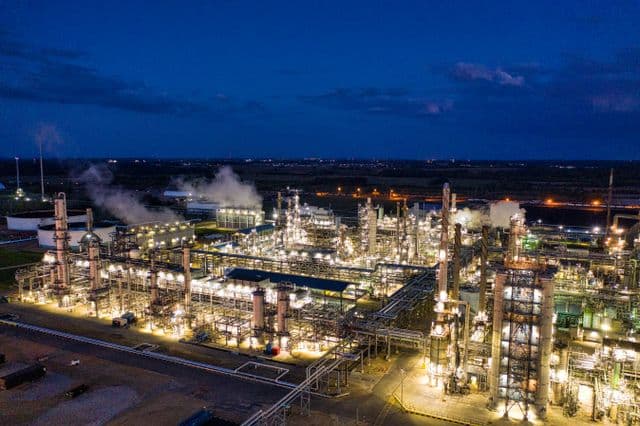
Downstream refers to the stage at which crude is refined into usable products such as gasoline, jet fuel, and petrochemicals, and then sold through retail and industrial channels.
The economic case for controlling all three is straightforward. When a company owns its inputs, it pays itself rather than a third party, reduces supply chain disruptions, and maintains visibility over quality, costs, and timing at every step. Today, several of the world's largest energy companies operate on this integrated model. Shell, ExxonMobil, Chevron, and BP all maintain upstream, midstream, and downstream operations across multiple continents, a structure that traces its origins to one of the boldest industrial experiments in American history.
How Rockefeller Built Standard Oil Through Vertical Integration
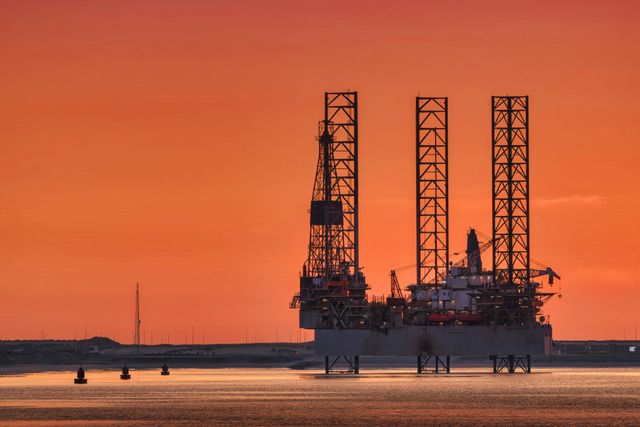
Image Source: Pexels
Standard Oil was founded in 1870 in Cleveland, Ohio, by John D. Rockefeller and a small group of associates, including Henry M. Flagler. The mechanism that gave Standard Oil its early dominance was the railroad rebate strategy. By 1880, through a combination of competitor elimination, mergers, and those favourable railroad agreements, Standard Oil controlled the refining of 90 to 95 percent of all oil produced in the United States. By 1904, it refined 91% of U.S. oil and controlled 85% of final sales.
The efficiency angle was just as important as market control. Standard Oil relentlessly sought ways to turn waste into profit. The clearest example is Chesebrough, maker of Vaseline. Standard Oil acquired the company in 1881 and used its distribution network to scale a petroleum byproduct into a nationwide consumer product.
Modern Companies Still Use Full Vertical Integration
The 1911 Supreme Court ruling that broke up Standard Oil did not end the integrated model; it scattered the pieces across dozens of successor companies, many of which have since recombined through a century of mergers. Today, the two most direct descendants are ExxonMobil and Chevron.
ExxonMobil is the direct heir of Standard Oil of New Jersey, the flagship entity of the original trust. Today, the company operates across upstream exploration and production, refining and product solutions, and chemicals, maintaining one of the broadest integrated footprints in the industry.
Chevron traces its lineage to Standard Oil of California, which was renamed Chevron Corporation in 1984 and later merged with Texaco in 2001. Like ExxonMobil, Chevron operates across all three segments, with major upstream positions in the Permian Basin, Kazakhstan, and Australia, and a significant downstream refining and chemicals operation.
Not every integrated major has held the full model intact. Some companies have spun off downstream assets in response to investor pressure for leaner balance sheets and more focused capital returns. BP and Shell, for example, have divested certain refining and retail operations over the past decade, reflecting a broader shift toward capital efficiency over structural breadth.
The key advantage that keeps the remaining integrated majors invested in the full model is earnings resilience across the commodity cycle. When crude prices fall, upstream earnings compress. But the downstream refining and chemicals businesses of integrated majors often benefit from cheaper feedstocks, bolstering refining margins and chemical profits. This natural offset smooths earnings in ways that a pure upstream or pure downstream company cannot replicate.
Why Vertical Integration Looks Different Today Than in 1880
Two forces have fundamentally reshaped what vertical integration can and cannot deliver in the modern energy industry: antitrust law and global commodity pricing. The 1911 Supreme Court ruling Standard Oil Co. of New Jersey v. United States was a landmark in American antitrust law. It established hard limits on a single company's ability to dominate an entire supply chain, ensuring that no modern energy company could legally replicate the market control Standard Oil once exercised.
Globalization has further undermined the pricing power that regional infrastructure control once provided. When Rockefeller owned the pipelines out of the Pennsylvania oil fields, he could effectively set the price of crude for any producer who needed to reach a refinery. Today, crude is priced on global benchmarks, West Texas Intermediate and Brent, which no single company, however large, can move by controlling regional infrastructure. Owning a pipeline still reduces cost; it no longer confers monopoly pricing power.
Does Vertical Integration Still Deliver a Competitive Advantage?
The honest answer is that the advantage is real but narrower than in Rockefeller's era. Integration today provides resilience and margin smoothing across the cycle rather than the structural pricing power Standard Oil wielded for three decades.
On the pro side, the hedging benefit is genuine and measurable. When crude prices collapsed in 2015 and again in 2020, the downstream and chemicals segments of integrated majors provided earnings support that pure upstream producers could not access. Supply chain certainty during geopolitical disruptions, sanctions, regional conflicts, and shipping chokepoints also has tangible value for companies that own their own logistics and refining capacity.
On the con side, the capital intensity of running refineries, pipelines, and retail networks across multiple continents ties up enormous balance sheets. Investors who favor capital returns over reinvestment have increasingly rewarded pure-play structures that return cash rather than deploy it into physical infrastructure.
ExxonMobil's acquisition of Pioneer Natural Resources, which closed in 2024, illustrates the tension well. The all-stock deal, valued at approximately $59.5 billion, more than doubled ExxonMobil's Permian Basin footprint, combining Pioneer's 850,000 net acres in the Midland Basin with ExxonMobil's existing Delaware and Midland acreage and, by leveraging how Natural gas drilling work in shale production systems, to create an estimated 16 billion barrels of oil equivalent resource. The acquisition was a bet on upstream scale and capital efficiency, not downstream expansion, signaling that even the world's most committed integrated major shapes its portfolio in response to what the market rewards at any given moment.
Investor Takeaway

Image Source: Unsplash
For investors evaluating integrated majors, the structure of the business demands segment-level analysis rather than reliance on headline earnings. Most major oil companies publish detailed segment reporting in their annual 10-K filings, breaking out upstream, downstream, and chemicals results separately. Tracking how each segment performs across different commodity price environments reveals whether integration is genuinely creating value or masking underperformance in one segment with strength in another.
Comparing integrated majors with pure-play peers is instructive. Marathon Petroleum and Valero operate as pure downstream refiners and offer a clean read on refining economics. Devon Energy provides an upstream-only benchmark for comparing capital efficiency in the E&P space.
The most important signal to watch is capital allocation discipline. Rockefeller's competitive edge was not simply owning every step of the chain; it was the relentless reinvestment in the most productive assets and the elimination of waste at each stage. Integrated majors that apply the same discipline in counter-cyclical investment, structural cost control, and capital allocation to the highest-return segments tend to compound value over time. Those that pursue scale for its own sake, acquiring assets at cycle peaks or holding refining capacity in structurally shrinking demand markets, tend to destroy it.
Conclusion
Rockefeller's vertical integration model was one of the most powerful competitive strategies in industrial history. By controlling every link in the chain, pipelines, refineries, distribution networks, retail, Standard Oil captured margins that competitors could not access and built cost advantages that proved almost impossible to overcome. The 1911 Supreme Court breakup ended the monopoly but not the underlying logic.
Today's integrated supermajors such as ExxonMobil and Chevron are direct descendants of that model. They use integration to hedge commodity price cycles, secure supply chains, and maintain scale advantages in capital markets. But antitrust law and global pricing benchmarks have closed the door on the kind of market control Rockefeller exercised for three decades. Integration in 2025 is a source of resilience, not dominance, a meaningful but structurally narrower competitive edge than the one that once controlled nine-tenths of an industry.
FAQs
What is vertical integration in simple terms?
Vertical integration means one company owns and controls multiple stages of its supply chain rather than buying goods or services from outside suppliers. In oil and gas, a vertically integrated company drills for crude oil, refines it, and sells the finished products all within the same corporate structure.
Did Rockefeller's Standard Oil really control 90% of U.S. oil refining?
Yes. According to Britannica, by 1880, Standard Oil controlled 90 to 95% of all U.S. oil refining through a combination of competitor elimination, mergers, and favorable railroad rebates. By 1904, it refined 91% of U.S. oil and controlled 85% of final sales, a level of dominance built systematically over more than three decades.
Is ExxonMobil still vertically integrated today?
Yes. ExxonMobil operates across all three segments of the oil and gas supply chain: upstream exploration and production, midstream, and downstream refining and chemicals. However, today's antitrust environment and global commodity markets make the kind of structural market control Standard Oil exercised legally and commercially impossible to replicate.

Comments