
Key Takeaways
- AI is increasing natural gas demand as data centers require large amounts of reliable electricity to support growing AI workloads. Natural gas-fired power generation can help meet this demand because it provides consistent power alongside renewable energy sources. At the same time, natural gas companies are using artificial intelligence for predictive maintenance, leak detection, real-time monitoring, safety management, and asset optimization. Together, these trends are making AI and natural gas demand an increasingly important factor for the energy industry and investors.
Introduction
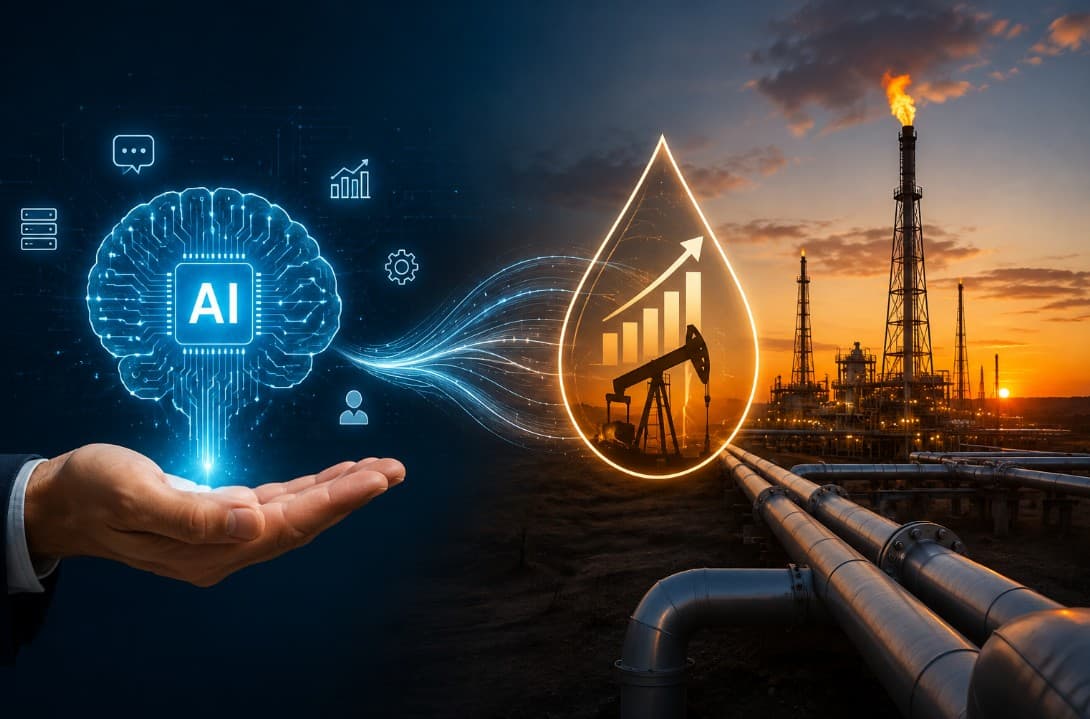
Artificial intelligence is reshaping the energy industry, with AI and natural gas demand becoming increasingly connected. The rapid expansion of AI-powered data centers is driving electricity consumption higher, creating additional demand for reliable power generation and, in turn, natural gas.
At the same time, energy companies are using AI to improve efficiency, predict equipment failures, strengthen safety, and optimize natural gas operations.
The AI impact on the natural gas industry could extend across the entire value chain, from gas production and pipelines to power generation and LNG infrastructure.
As data center development accelerates and AI adoption expands, understanding how these trends affect AI natural gas demand is becoming increasingly important for energy companies and investors.
AI Is Increasing Demand for Natural Gas
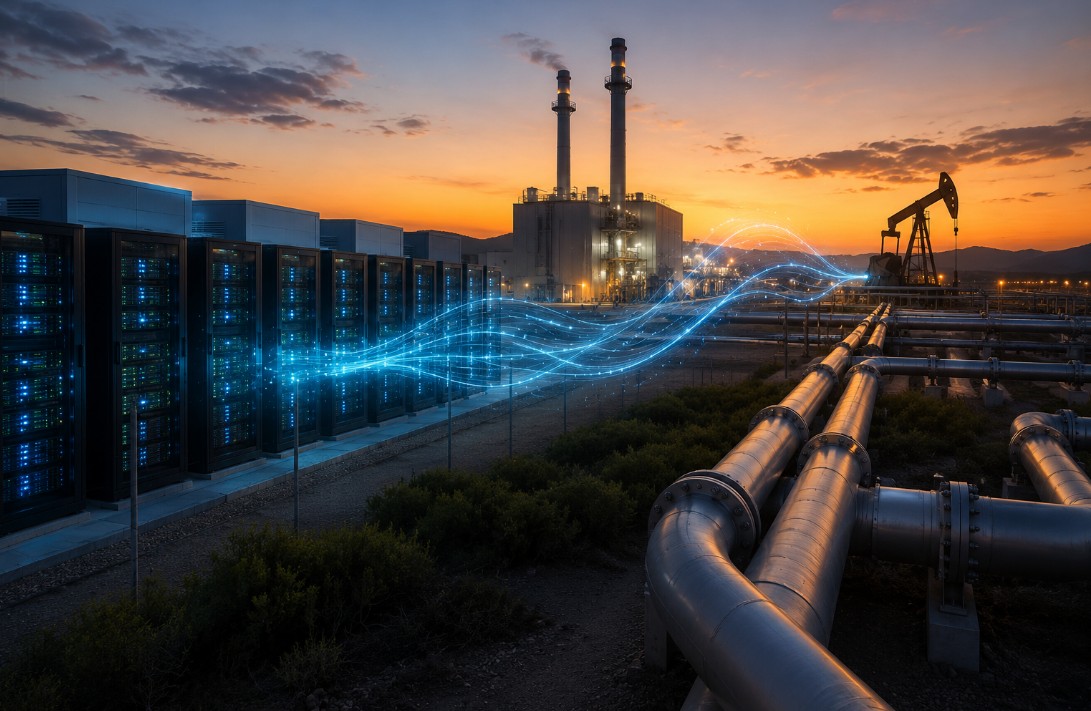
The rapid growth of AI is creating an unprecedented need for electricity. Data centers that support AI applications operate around the clock and require large amounts of reliable power. According to Chevron, U.S. data centers currently account for approximately 2% of total U.S. electricity consumption, and that share is expected to grow as AI adoption expands. Goldman Sachs estimates that incremental data center demand could drive 3.3 billion cubic feet per day (Bcf/d) of additional natural gas demand by 2030. Source: Chevron (2025).
Natural gas has emerged as a preferred power source because it can provide continuous electricity regardless of weather conditions. Unlike intermittent renewable energy sources, gas-fired generation can operate whenever power is needed, making it attractive for data center operators seeking reliable service.
Wood Mackenzie notes that "speed to power" has become a critical consideration for hyperscale data center developers. As AI workloads increase, companies increasingly prioritize access to dependable generation capacity, often turning to natural gas as part of the solution.
What It Means for Investors
Growing electricity demand from AI infrastructure could support long-term natural gas consumption. Investors should watch upstream gas producers, pipeline operators, LNG exporters, and gas-fired power generation companies that may benefit from rising demand tied to data center growth.
Natural Gas Is Becoming Part of AI Infrastructure
Technology companies are no longer relying exclusively on traditional grid connections. Instead, some are developing dedicated power systems to support large AI facilities.
Chevron, Engine No. 1, and GE Vernova announced plans to develop up to four gigawatts of natural gas-fired generation capacity for U.S. data centers. More recently, Chevron signed a long-term agreement with Microsoft to help power a major Texas AI data center project. These developments highlight how natural gas infrastructure is becoming increasingly integrated with AI expansion plans.
This represents a significant shift in energy planning. Instead of waiting years for new grid connections, some data center developers are building power generation alongside computing infrastructure.
What It Means for Investors
Natural gas is increasingly positioned as a critical component of AI infrastructure. Investors may see growing opportunities among companies involved in gas production, pipeline transportation, gas-fired generation, and energy infrastructure development serving data center markets.
AI Is Improving Natural Gas Operations
While AI is increasing energy demand, it is also helping natural gas companies operate more efficiently.
According to ScottMadden, natural gas operators are deploying AI for predictive maintenance, real-time monitoring, leak detection, cybersecurity, emergency response, and workforce management. AI systems can analyze operational data continuously and identify potential issues before they result in equipment failures or service disruptions.
Predictive maintenance is one of the most widely adopted applications. Rather than repairing equipment after a failure occurs, operators can use AI models to identify warning signs and schedule maintenance proactively.
Think of it like monitoring a vehicle's engine. Instead of waiting for a breakdown, sensors detect abnormal conditions early, allowing repairs before a major problem develops.
What It Means for Investors
Operational efficiency directly affects profitability. Companies that successfully implement AI-driven maintenance and monitoring systems may reduce operating costs, improve reliability, and extend asset life. These improvements can strengthen cash flow and operational performance over time.
AI Is Enhancing Safety and Environmental Performance

Safety remains one of the most important priorities in the natural gas industry. AI is helping operators improve situational awareness and identify potential risks more quickly.
ScottMadden highlights AI applications in leak detection, real-time safety monitoring, operator training, and emergency preparedness. AI systems can analyze large volumes of operational data much faster than traditional manual processes.
Environmental performance is another area receiving attention. AI-powered monitoring tools can help identify methane emissions, optimize equipment performance, and improve regulatory compliance.
As governments and investors place greater emphasis on emissions management, technologies that improve visibility into operations may become increasingly valuable.
What It Means for Investors
Companies that improve safety and environmental performance may face lower operational risks and stronger regulatory compliance outcomes. Investors evaluating natural gas companies should monitor how effectively management teams integrate AI into safety and emissions management programs.
Summary Table
Topic | Key Data Point | Investor Implication |
Data Center Electricity Demand | Data centers currently account for about 2% of U.S. electricity use | Supports long-term natural gas demand growth |
Incremental Gas Demand | Goldman Sachs projects 3.3 Bcf/d of new gas demand by 2030 | Benefits gas producers and infrastructure operators |
Dedicated Power Generation | Chevron-led projects aim to deliver up to 4 GW for data centers | Expands opportunities for gas-fired generation |
AI Operational Applications | Predictive maintenance, leak detection, cybersecurity | Improves efficiency and reduces operating costs |
Safety and Compliance | Real-time monitoring and risk detection | May lower operational and regulatory risks |
Conclusion
Artificial intelligence is influencing the natural gas industry from both sides of the equation. It is creating new demand for reliable electricity while helping operators improve efficiency, safety, and reliability.
Data center expansion is strengthening the case for natural gas as a dependable power source, while AI-powered operational tools are helping companies optimize assets and reduce risk.
Investors should monitor data center development, natural gas demand forecasts, and AI adoption across energy infrastructure as these trends continue to evolve.
FAQ
Why does AI increase natural gas demand?
AI data centers consume large amounts of electricity, increasing demand for reliable natural gas-fired power generation.
How are natural gas companies using AI?
Companies use AI for predictive maintenance, leak detection, equipment monitoring, safety, cybersecurity, and operational planning.
Why are data centers important for natural gas investors?
Growing data center electricity demand can increase natural gas consumption and create opportunities across gas production, pipelines, and power generation.
Can AI improve natural gas safety?
Yes. AI can detect equipment problems, leaks, and unusual operating conditions faster, helping reduce safety risks.
What should investors monitor going forward?
Investors should monitor data center growth, electricity demand, natural gas consumption, infrastructure development, and AI adoption.
How do data centers affect natural gas demand?
Data centers require continuous electricity, which can increase demand for natural gas-fired generation where gas is used for reliable power.
Will AI change natural gas infrastructure?
Yes. AI-driven power demand could support new gas generation, pipelines, storage, and other energy infrastructure.
